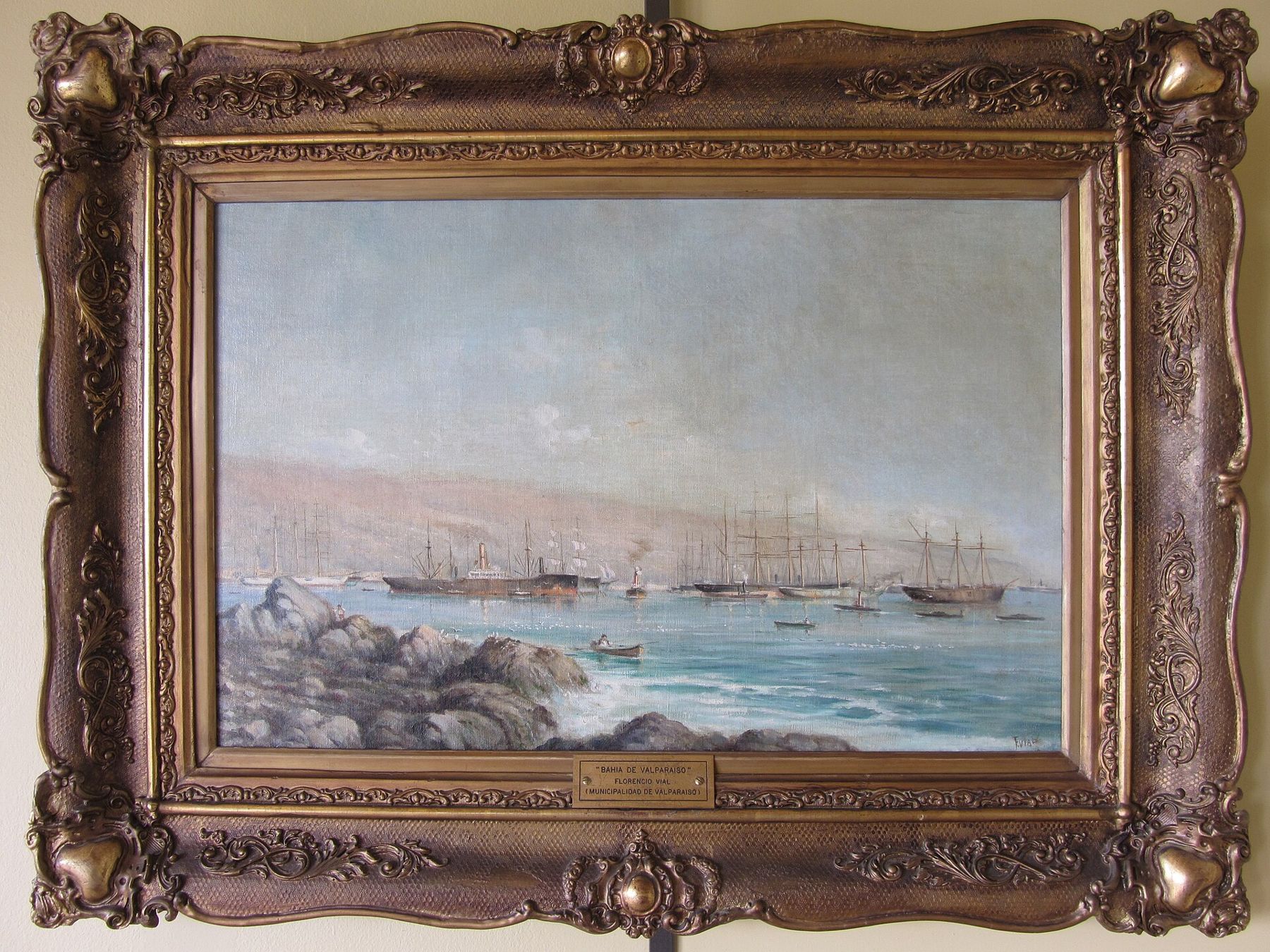
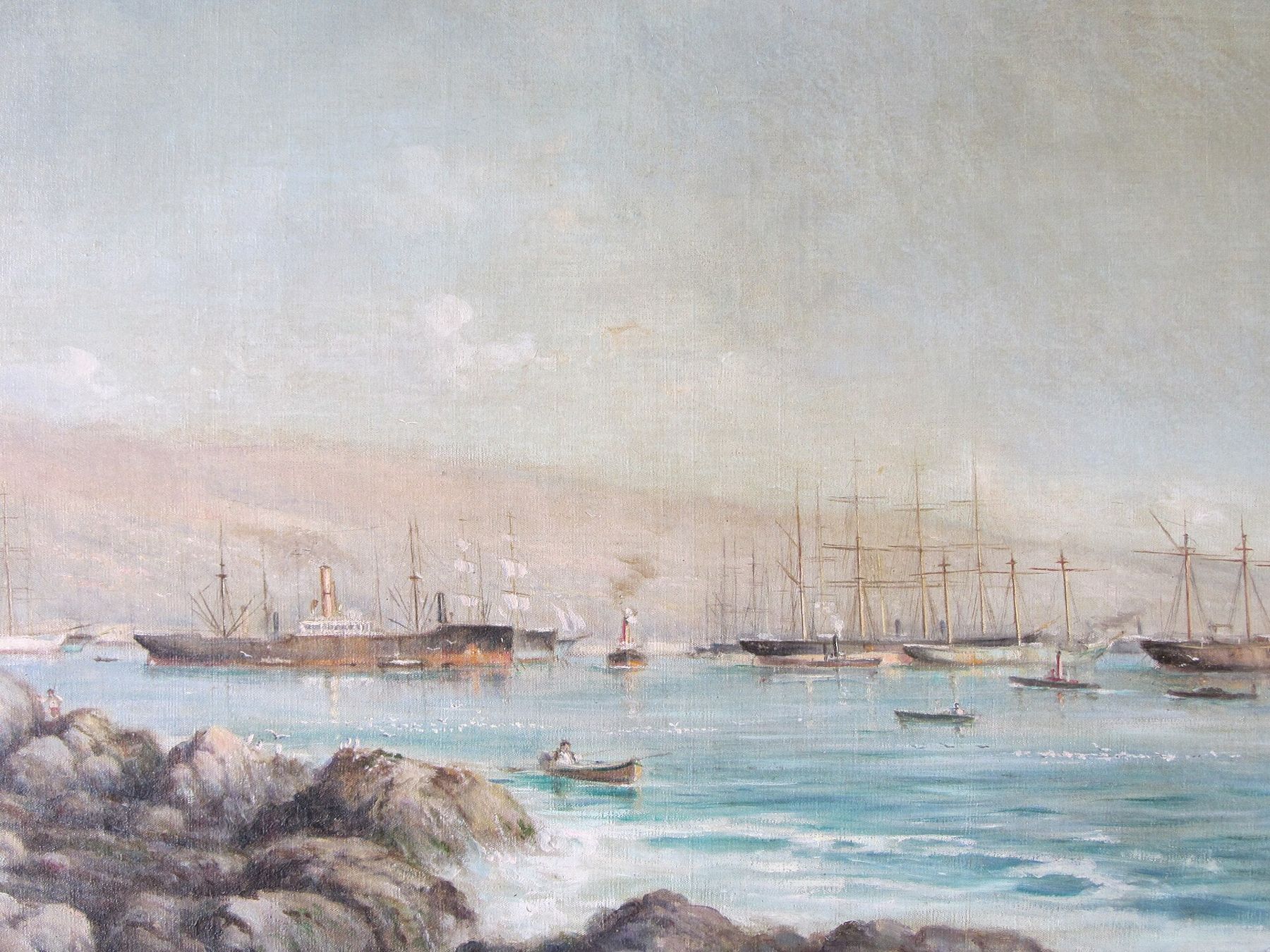
Valparaíso is a port city built on a narrow strip of flat land along a bay, backed by a curved wall of forty-odd hills, the cerros. The houses climb them in tiers. Stairways, alleys and steep lanes connect the levels, and the old funiculars, the ascensores, haul people straight up the slopes in wooden cars. From the water, the whole city looks like a theatre turned towards the sea. Its historic quarter has been on the UNESCO World Heritage list since 2003.
The streets at the bottom are nearly at sea level, and the hills rise a few hundred metres at most, so altitude plays no part. What the walk asks of you is steepness. The climbs are short and sharp, the stairways long, and the cobbles slippery in the damp. The coast has a Mediterranean climate: dry, sunny summers, cool winters with most of the rain from May to August, and sea fog that often fills the bay in the morning and burns off by midday. The wind off the Pacific is constant and cool. Bring layers, a hat for the sun on the high terraces, and shoes with good grip.
In the nineteenth century this was the most important port on the Pacific coast of South America, the first big stop for ships after rounding Cape Horn, with banks, merchant houses and communities from Britain, Germany and Italy. The opening of the Panama Canal in 1914, and an earthquake in 1906 that had already damaged much of the city, ended that era. The houses on the hills, many built of wood and clad in corrugated iron, are the legacy of those years.
Paseo 21 de Mayo, Cerro Artillería
Begin on the western side of the bay, on Cerro Artillería, where a terrace looks over the whole port. Below are the container docks and cranes, the naval base and the ships at anchor in the bay; across the water, the hills of the city rise in their colours, and beyond, the coast curves north to Viña del Mar. In the morning, the sea mist may cover the water and lift slowly as you watch. The Ascensor Artillería, one of the old funiculars, links the terrace with the lower town.
Behind the terrace, the Maritime Museum occupies the old naval school, with cannons on its lawn facing the sea.
Plaza Sotomayor
Walk east through the lower town to Plaza Sotomayor, the city's naval square. At its end, facing the sea, stands the monument to the Heroes of Iquique, honouring Arturo Prat and the sailors who died in a naval battle against Peru in 1879, in the War of the Pacific. Behind them, the pier, Muelle Prat, has boats that offer short trips around the bay. On the inland side of the square, the large building with the blue facade is the headquarters of the Chilean navy.
The lower town here is the old financial district, with banks and offices built in grand style during the boom. Walk with care in the lower streets, where bag snatching is common, and keep your phone in your pocket.
Ascensor El Peral and Paseo Yugoslavo
Behind the Palace of Justice, on the side of the square, the Ascensor El Peral climbs the cliff to Cerro Alegre. The cars are small and wooden, and the ride is short and steep, with the city falling away behind you. The ascensores were built from the 1880s onward, and several still run after long restorations; others have stopped. Their operation changes, so do not rely on any single one.
At the top, the Paseo Yugoslavo is a terrace with a balustrade and views over the bay, and next to it stands the Palacio Baburizza, an early twentieth-century mansion that now houses the city's fine arts museum.
 80 mLima, on the edge of the cliffs
Cerro Alegre
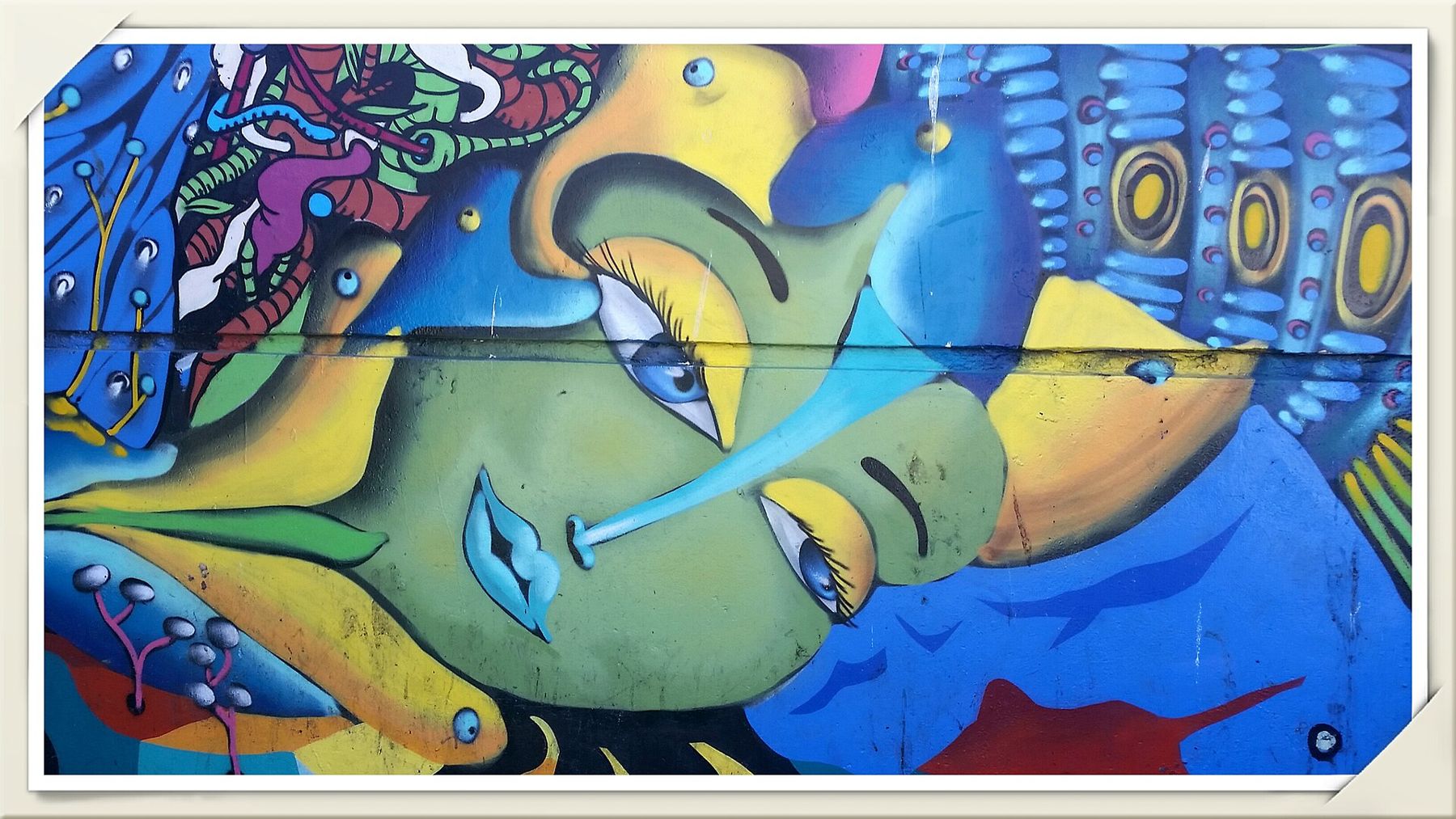
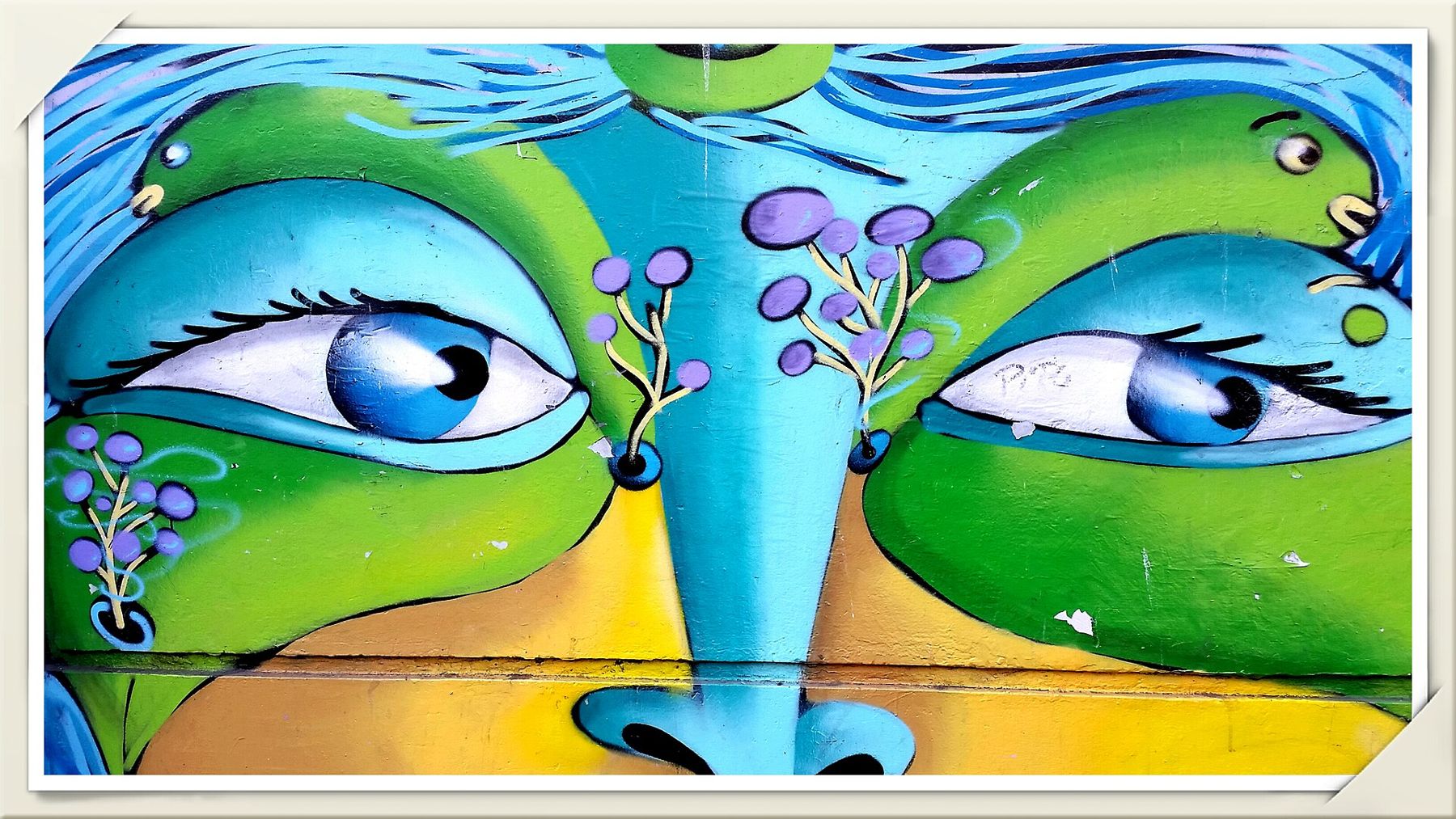
From the terrace, walk up into Cerro Alegre. The streets are steep and winding, the houses painted in strong colours: yellow, red, turquoise, sky blue. Many walls carry murals, from small stencils to whole facades, and the art changes from year to year as new pieces cover the old. Walking here is an exercise in slow climbing and frequent stops, which is just as well, because every corner has another view.
Stairways cut down between the houses to the lower town, and some of them are themselves painted, step by step, in colour. Take care on the steps in the damp, and keep to the busy streets; the upper reaches of the hills are poorer and quieter.
Paseo Gervasoni, Cerro Concepción
Cerro Alegre runs into Cerro Concepción, its neighbour, with no clear line between them. The Paseo Gervasoni is a small terrace at the top of the Ascensor Concepción, the oldest of the city's funiculars, opened in 1883. From here the view takes in the lower town and the clock tower of the old financial district directly below.
These two hills were settled by British and German merchant families in the nineteenth century, and the street names and architecture show it: steep roofs, bay windows, iron balconies.
Paseo Atkinson and the Lutheran church
A few steps along, the Paseo Atkinson runs along the cliff edge with a row of old houses facing the sea, their small front gardens and balconies looking out over the rooftops below. Just behind it rises the tall white steeple of the Lutheran Church of the Holy Cross, built for the German community in the 1890s, a landmark you can see from the bay. Nearby, the Anglican church of St Paul's served the British community.
La Sebastiana, Cerro Bellavista
The last climb is longer. Take a taxi or bus up to Cerro Bellavista, or walk the steep streets east. La Sebastiana was the Valparaíso house of the poet Pablo Neruda, a narrow, tall building that he bought in the late 1950s and finished in his own style, with curving walls and big windows. It is now a museum. Even from outside, the reason he chose it is clear: from its height, the house looks over the whole bay, the port, the ships and the hills.
The upper hills have also been the scene of large fires, which in dry, windy summers can spread quickly through the wooden houses and the brush on the slopes. If smoke is visible, follow local advice.
On from the bay
From Valparaíso, the Andes rise to the east across the central valley, and the road over the high pass leads to the vineyards of Mendoza, in Argentina. North, along the desert coast, the profile climbs to the geysers of El Tatio and the Atacama, more than four thousand metres up. And across the continent, the other great port of the south, Buenos Aires, spreads flat along its river.
Come back down to the bay in the evening, by the stairways or the funicular, and watch the lights come on across the hills, tier on tier above the dark water.