Lima is a desert city of around ten million people, built on a flat shelf of gravel that ends abruptly in cliffs above the Pacific. It barely ever rains here. For much of the year, though, the sky is a lid of low grey cloud, and a fine mist, the garúa, settles on the streets and parks in the mornings. The cold Humboldt current running up the coast chills the air above the sea and holds the cloud down. The result is a capital that is humid but dry, cool but never cold, and most of the year shaded from the sun it sits under.
At around eighty metres above the sea at the cliff edge, Lima asks nothing of your lungs. For many travellers it is the last day at sea level before they fly up to Cusco, which makes it a good place to rest, eat well and get ready for the thin air. The conditions to pack for are humidity and, in summer, sun: the garúa season, from roughly May to November, needs a light jacket; the summer, from December to April, is warm, clear and bright, and the sun is strong enough to burn quickly.
The Costa Verde cliffs
The city's best walk runs along the top of the cliffs. From the edge of Miraflores, a chain of parks and gardens follows the clifftop for several kilometres, a green strip with paths, benches and lawns between the apartment towers and the drop. Below, the coastal road, the Costa Verde, runs along the foot of the cliffs beside pebble beaches where surfers wait in the cold water for the long Pacific swells. On a clear summer day you can see the curve of the bay out to the headland of Chorrillos.
Paragliders launch from the clifftop and hang in the updraft over the parks, turning slowly above the walkers. In the Parque del Amor, a large sculpture of a couple locked in a kiss lies on the lawn, surrounded by mosaic walls carrying lines of poetry. It is a well-loved place, with couples on the benches and families watching the sunset, and when the summer sky clears in the evening, the sun drops straight into the ocean.
The cliffs are made of loose gravel and sand, not rock, and the edges can slip, especially after earthquakes. Keep to the paths and the railings, and do not climb down except on the stairways and footbridges built for it.
Huaca Pucllana
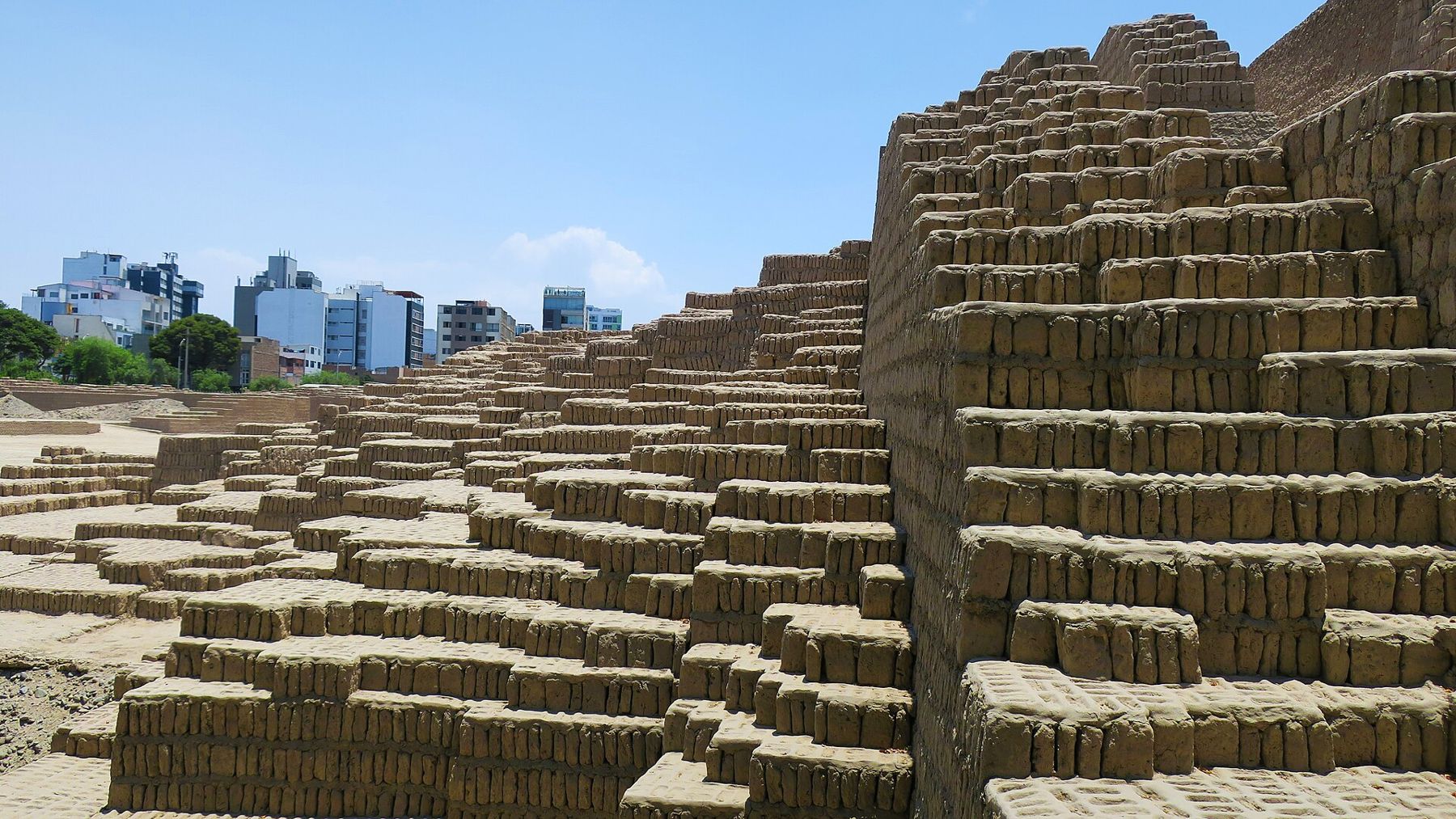
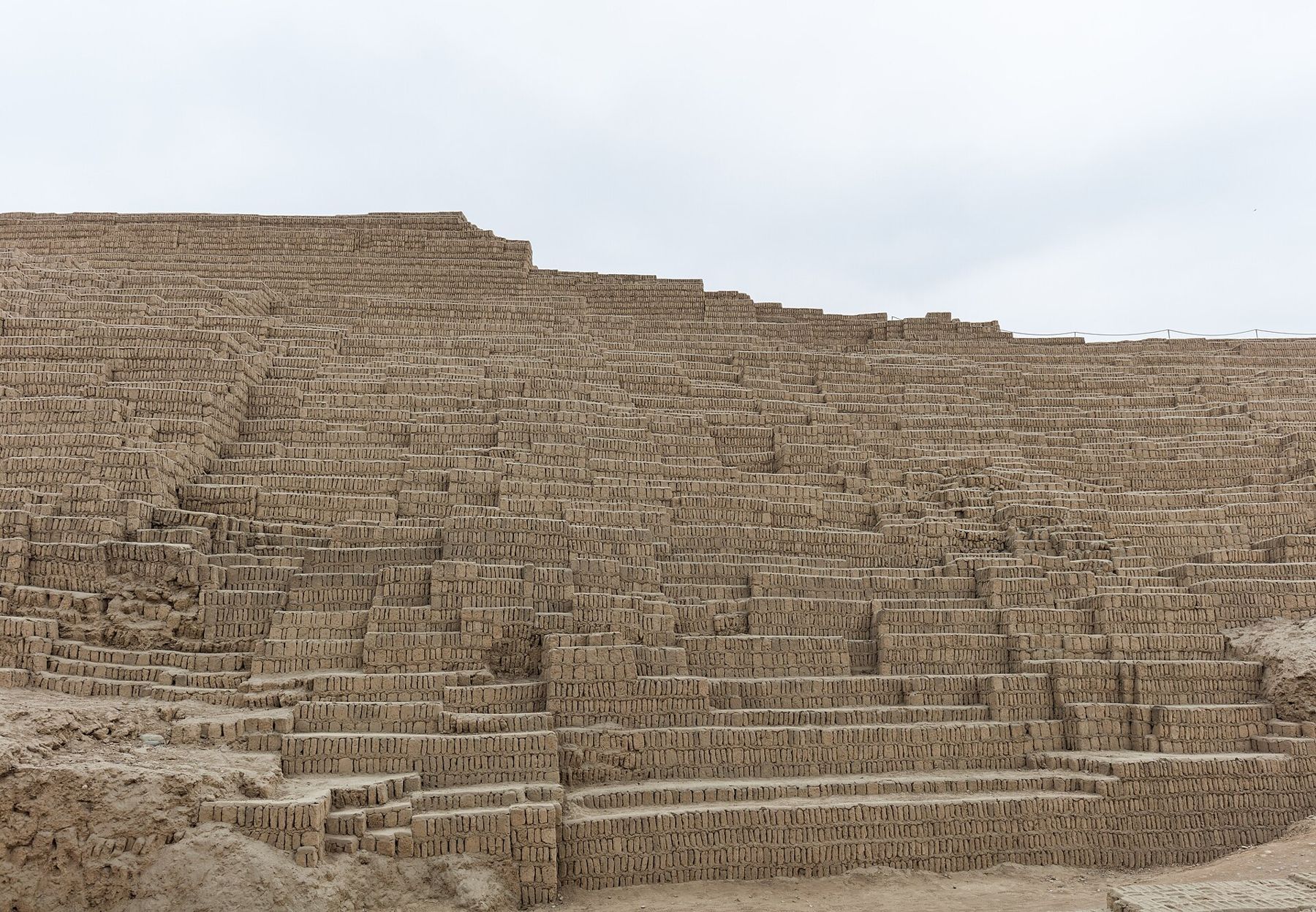
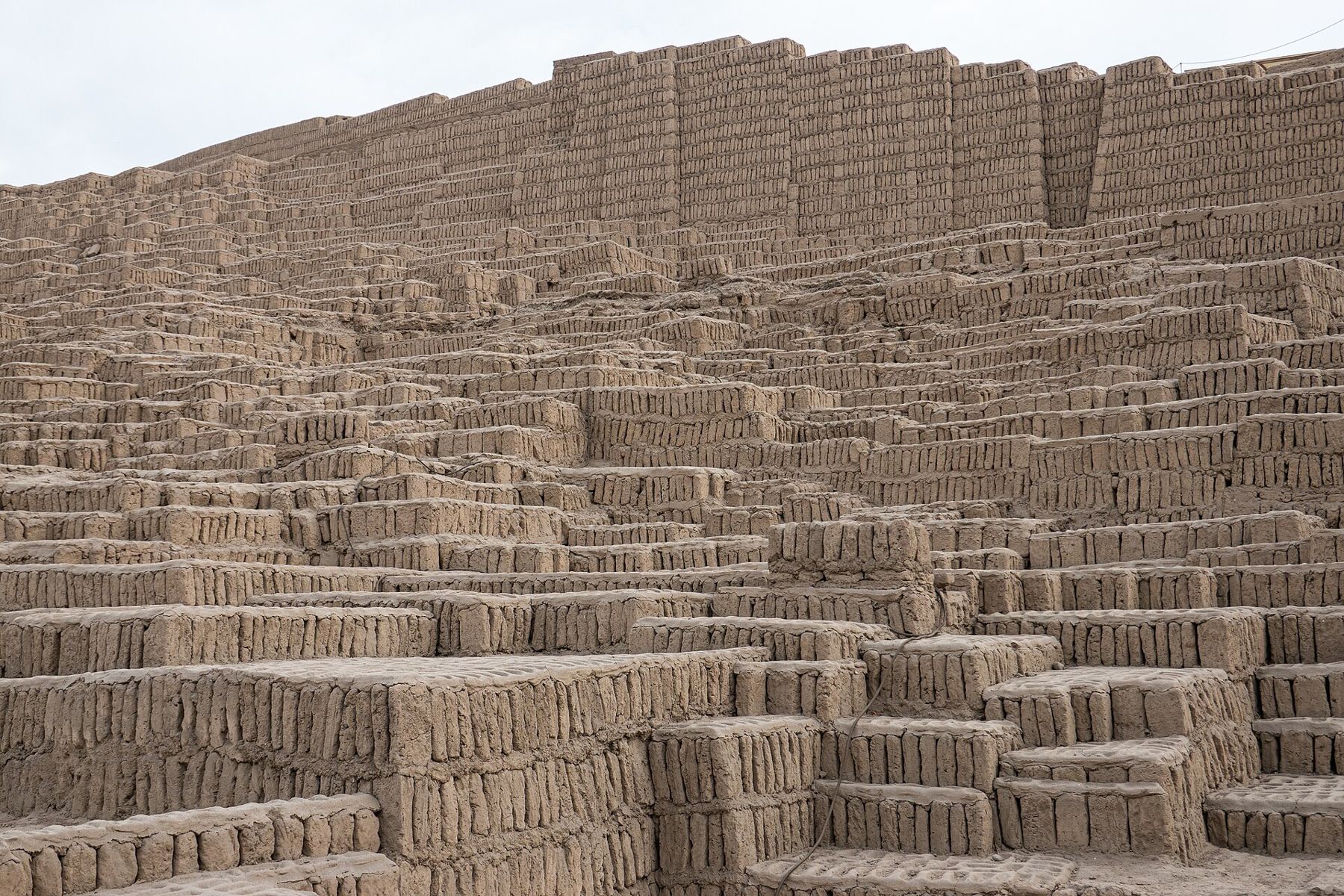
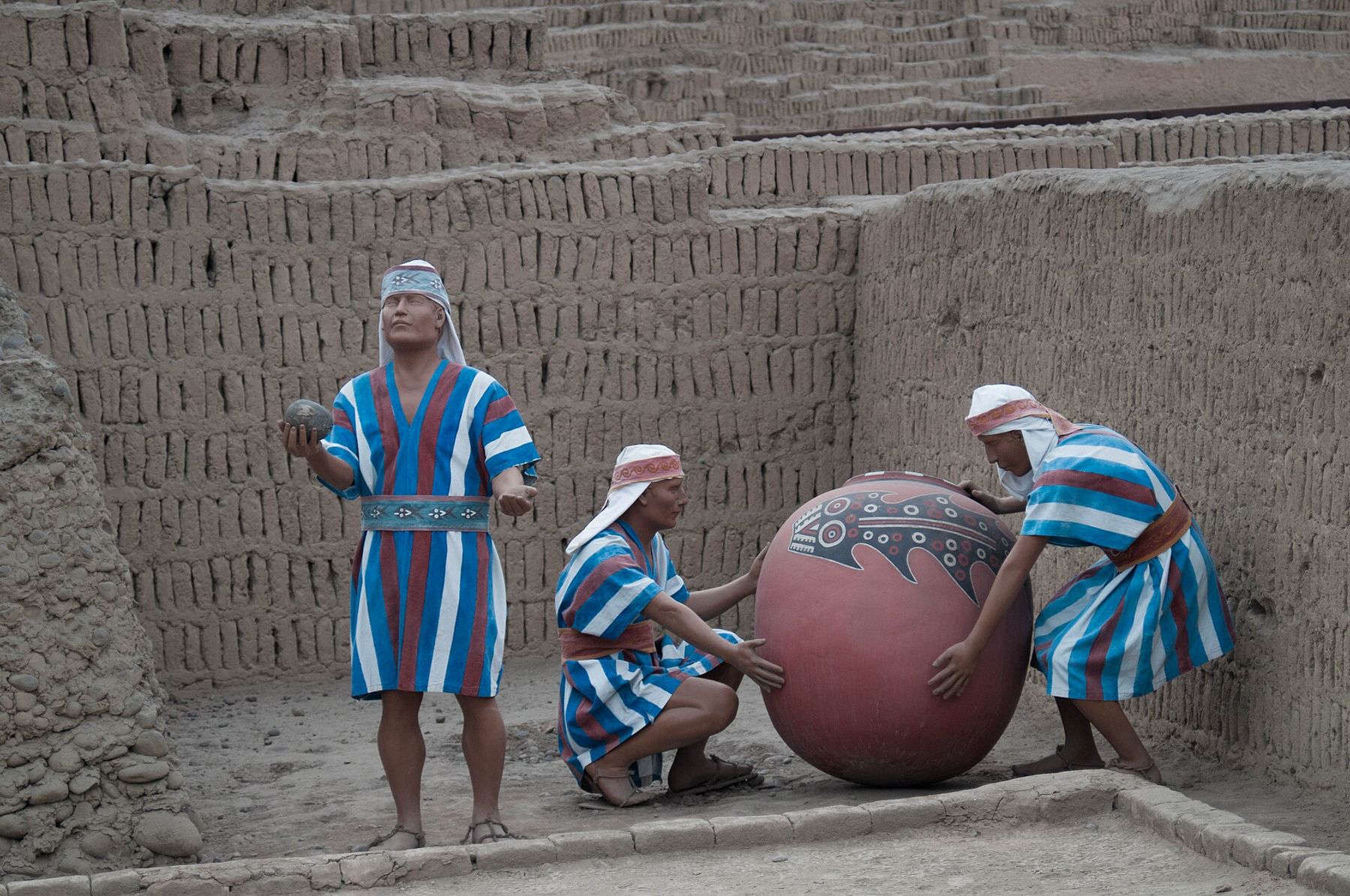
In the middle of Miraflores, surrounded by apartment buildings and traffic, a large stepped pyramid of mud brick rises out of a city block. Huaca Pucllana was built by the people of the Lima culture, who flourished on this coast roughly between the third and the seventh centuries AD, long before the Inca. It was a ceremonial and administrative centre, and its main pyramid is made of millions of small handmade adobe bricks.
The bricks are laid on edge, like books on a shelf, with gaps between them. This technique, archaeologists believe, helped the structure flex and survive earthquakes. Later, the Wari culture used the site to bury their dead. Excavations continue, and the guided tours lead along the terraces and into the plazas among the walls, with the towers of modern Miraflores rising behind.
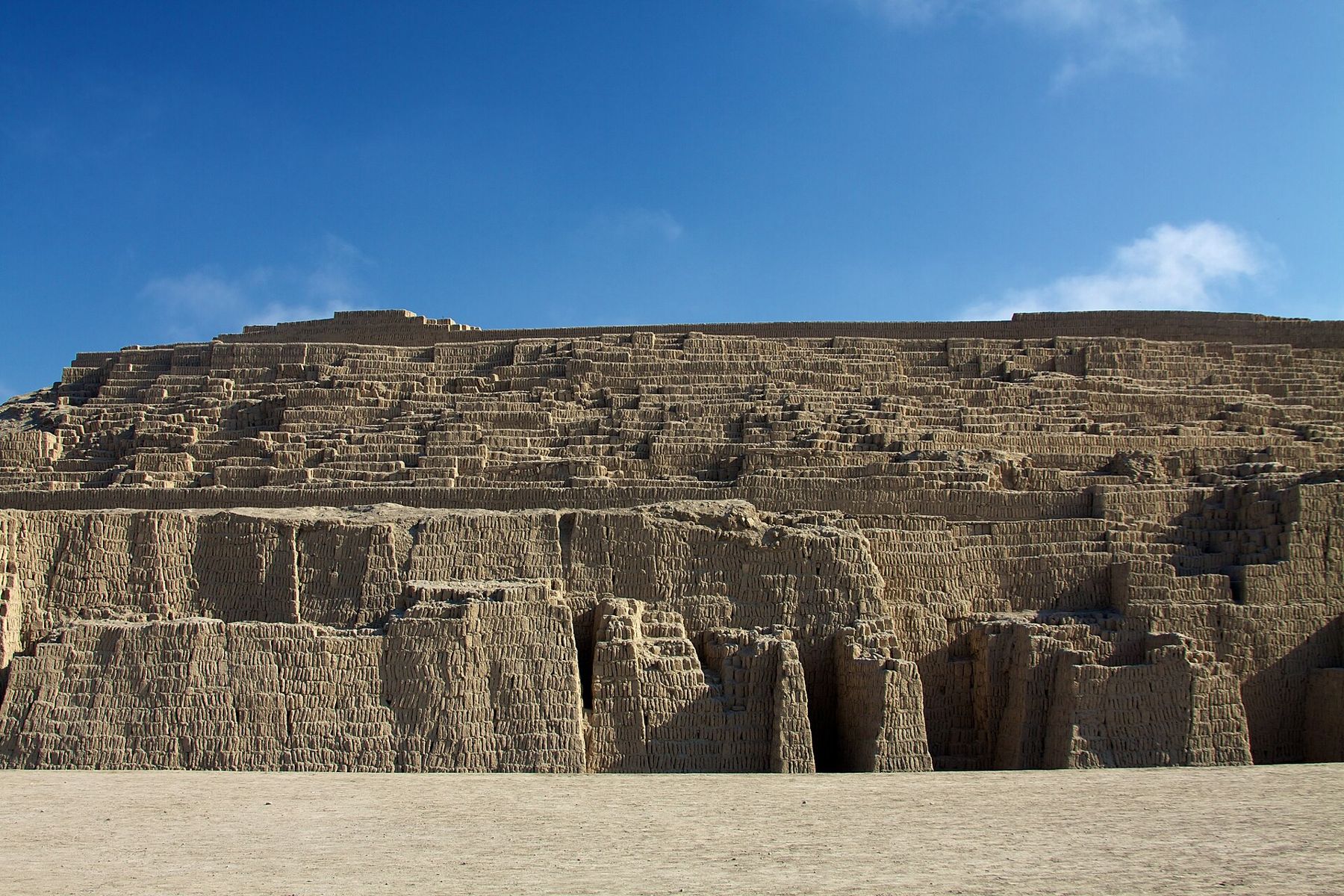
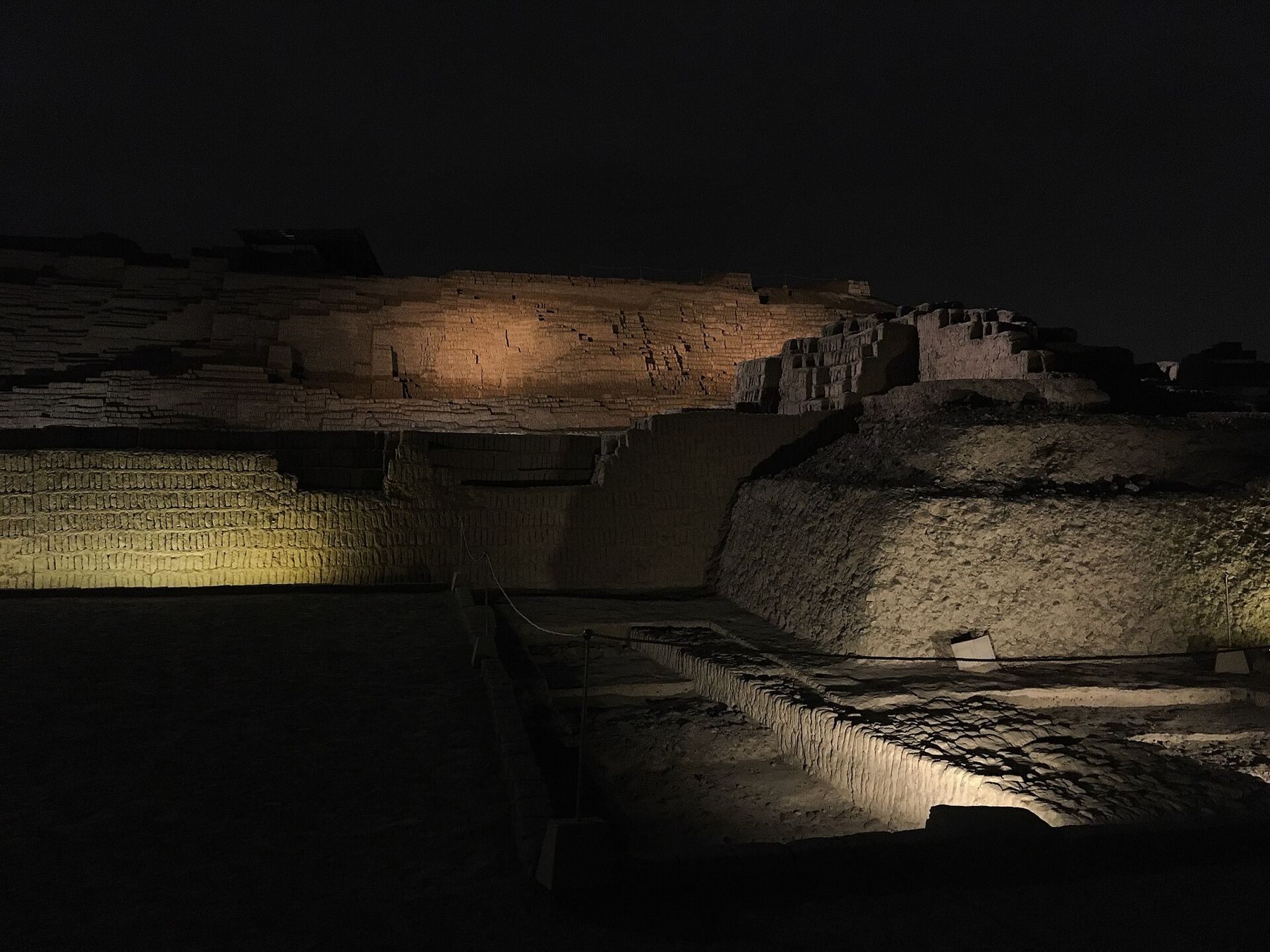
Near the walls there are reconstructions of daily life, with life-size figures, and small enclosures with native plants and animals such as guinea pigs, llamas and the hairless Peruvian dog. Seen at night, when the terraces are lit, the pyramid glows gold in the middle of the city.
It barely ever rains here.
 50 mValparaíso's hills
Barranco and the bridge
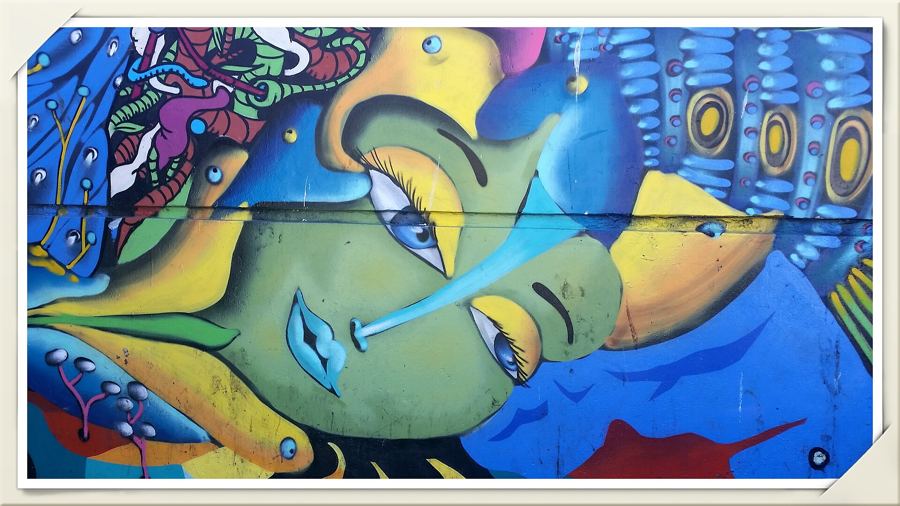
South of Miraflores along the cliffs, Barranco began as a seaside resort for the city's wealthy families in the nineteenth century. Their summer houses still line the streets: wooden balconies, high ceilings, pastel walls and big windows, some well restored, some leaning and waiting. Artists, writers and musicians moved in during the twentieth century, and the district is now Lima's most bohemian, with galleries, music venues and murals.
At its centre is the Puente de los Suspiros, the Bridge of Sighs, a small wooden bridge over a sloping, tree-shaded ravine. Beneath it, a stepped stone path, the Bajada de Baños, runs down between old houses to the sea at the foot of the cliff. The bridge is celebrated in a popular song by Chabuca Granda, one of Peru's best-loved composers. It is said that if you cross it holding your breath, a wish comes true.
The streets around the main square, with its church and its library, are quiet by day and lively by night, when the bars and peñas fill with criollo music. Barranco is easily walkable from Miraflores along the clifftop parks, around half an hour on foot.
The colonial centre
Inland, several kilometres from the coast, the colonial centre of Lima holds the oldest layers of the Spanish city. Francisco Pizarro founded Lima in 1535, and it became the capital of the Viceroyalty of Peru, ruling much of Spanish South America. The historic centre is on the UNESCO World Heritage list.
The Plaza Mayor is its heart, with the cathedral, the Archbishop's Palace with its carved wooden balconies, and the Government Palace, where the changing of the guard draws a crowd. A few blocks away, the Monastery of San Francisco holds a fine library and catacombs, the city's burial vaults for centuries, where bones are arranged in patterns. Many streets in the centre still carry the dark wooden enclosed balconies that were once a symbol of the city.
The centre is busy and crowded by day. Keep bags in front and phones out of sight, and take official taxis or app cars rather than walking long distances at night, as in any large capital. See our notes on money and staying safe.
The grey sky and the season
The garúa defines the city for more than half the year. From around May to November, the cloud sits low, the air is damp and cool, and the light is flat. It drizzles but does not rain; streets darken with moisture, gardens in the clifftop parks stay green with irrigation, and the bare hills behind the city stay brown. People wear jackets and scarves in a city that never sees frost.
From December to April the cloud lifts, the sun breaks through, and Lima becomes a beach city. The humidity stays high and the sun is fierce, so use sunscreen and a hat even when the temperatures feel moderate. The sea stays cold all year, thanks to the current.
The same cold current is the reason the city eats the way it does. The upwelling water off this coast is rich in nutrients and fish, and Lima's signature dish, ceviche, is raw fish cured in lime juice with chilli, onion and salt, served with sweet potato and toasted corn. It is a lunchtime dish here, traditionally eaten when the fish is freshest, rarely at night. At the far end of the bay, below the headland of Chorrillos, small wooden fishing boats still land their catch at the old fishing quay, and the stalls on the waterfront sell it the same morning. Walk out there along the beach road on a summer day, with the cliffs on one side and the Pacific breaking on the stones on the other.
From the coast to the mountains
Lima is a natural starting point for the climb. One step up the profile, Arequipa lies at around 2,300 metres under its volcanoes, with sun nearly every day. Higher still, the flight to Cusco, at around 3,400 metres, is short, and lifts you through more than three kilometres of altitude in that time. Read altitude sickness, plainly before you board, and plan the first day there for rest.
Below the cliffs, the Pacific keeps coming in long grey rows. It is the lowest point on this map of Peru, and everything else is higher.