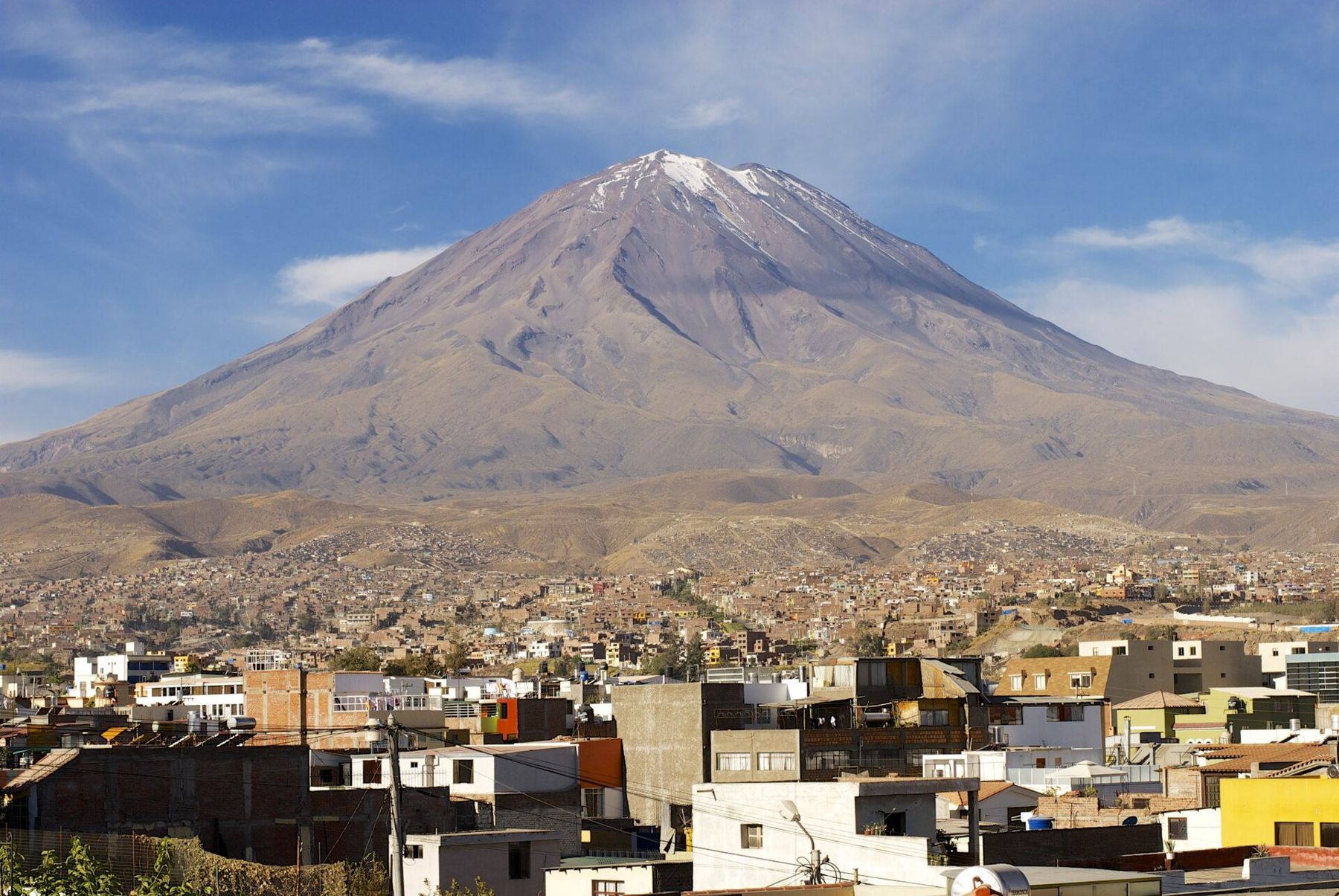
Arequipa is built of the ground beneath it. The stone is sillar, a pale volcanic rock, white to pinkish-grey, soft enough to carve when it comes out of the quarry and hard enough to last for centuries. The churches, the mansions, the arcades and the convent walls are all made of it, and in the strong desert light the whole centre seems to glow. That is why Peruvians call it the white city.
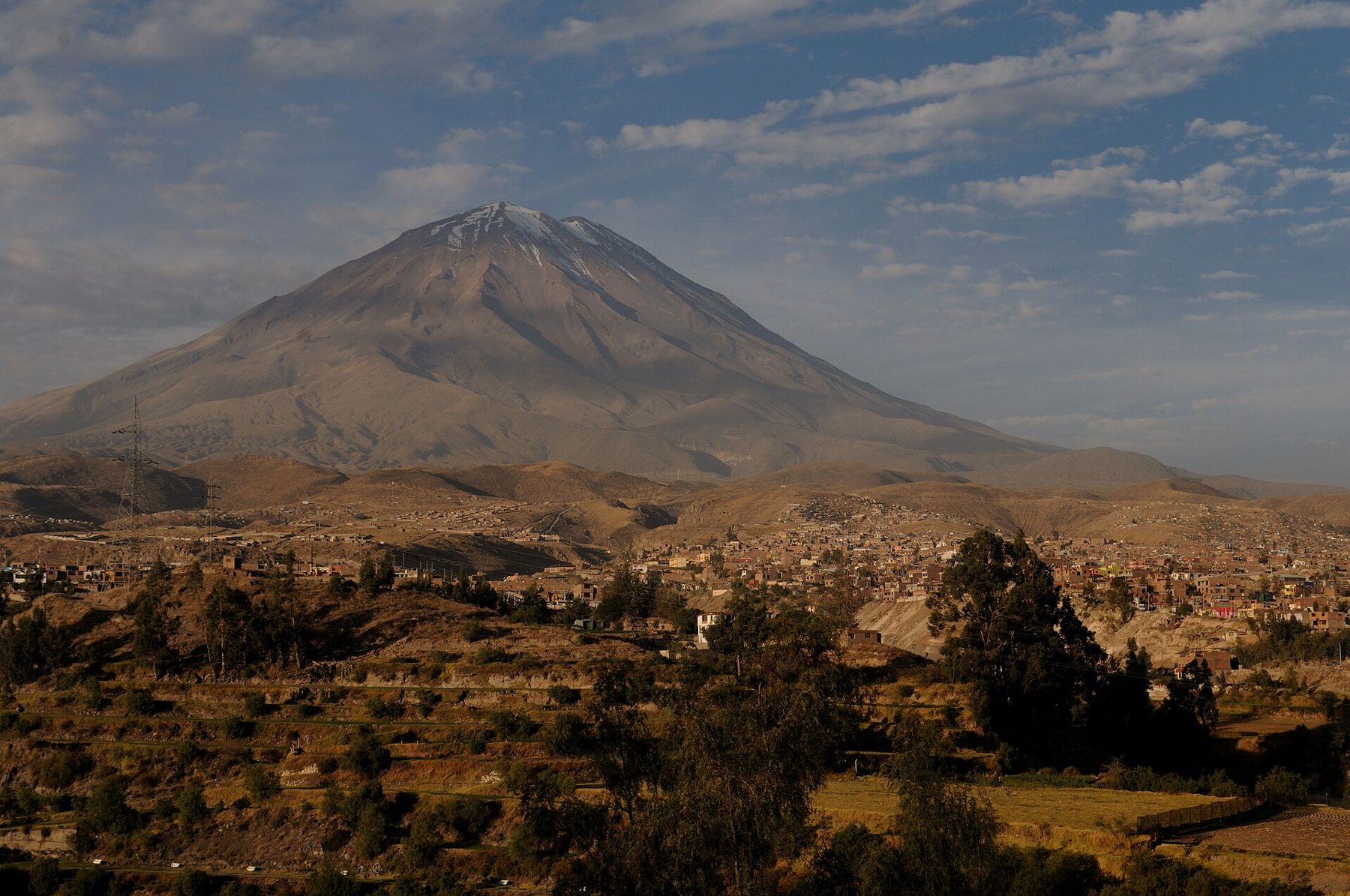
The volcanoes that made the stone stand over the city. El Misti, the near-perfect cone to the northeast, rises to about 5,800 metres. Chachani, broader and higher, stands to the north, and the jagged ridge of Pichu Pichu to the east. On a clear morning, which is most mornings, they fill the end of almost every street.
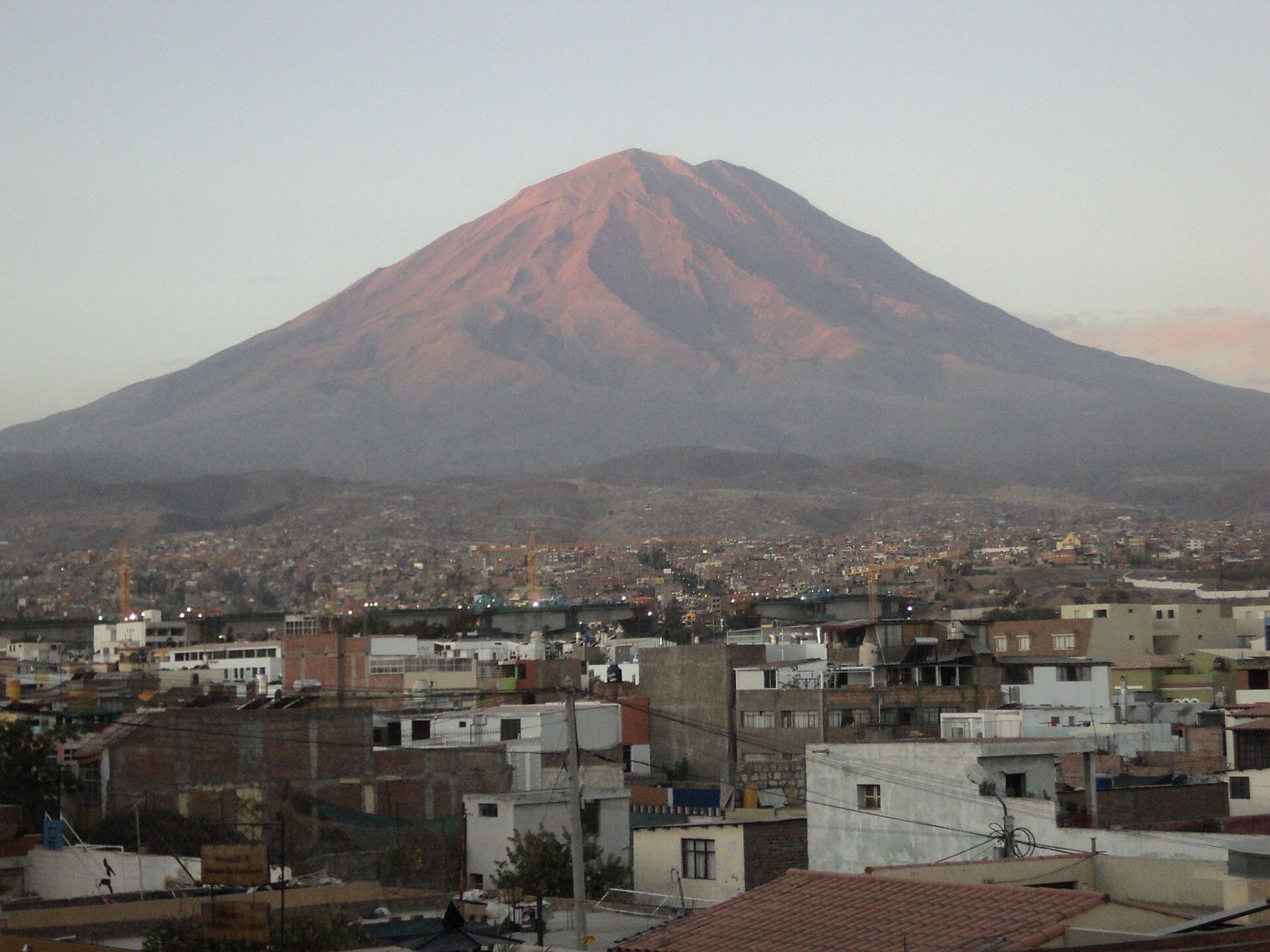
The city stands at 2,335 metres. The air holds roughly three quarters of the oxygen at sea level, enough that a fast climb up the convent stairs leaves you breathing hard. Most visitors feel nothing more than a little tiredness on the first day; take it easy, drink water and keep the first evening short. The bigger force here is the sun. Arequipa sits on the edge of the desert, it rarely rains outside the summer months, and the light is fierce at midday. Wear a hat and sunscreen. The nights, by contrast, are cold, so carry a warm layer after dark.
This walk takes half a day at an easy pace, or a full day with the monastery. It covers about three kilometres on mostly flat streets, with one bridge and one gentle climb at the end.
Plaza de Armas
The Spanish founded Arequipa in 1540, and the Plaza de Armas has been its centre ever since. It is one of the finest squares in Peru. On three sides run two-storey arcades of white sillar, their arches shading the pavements. Tall palms stand in the middle around a bronze fountain, and the gardens are busy from morning to night with families, students and shoe-shiners.
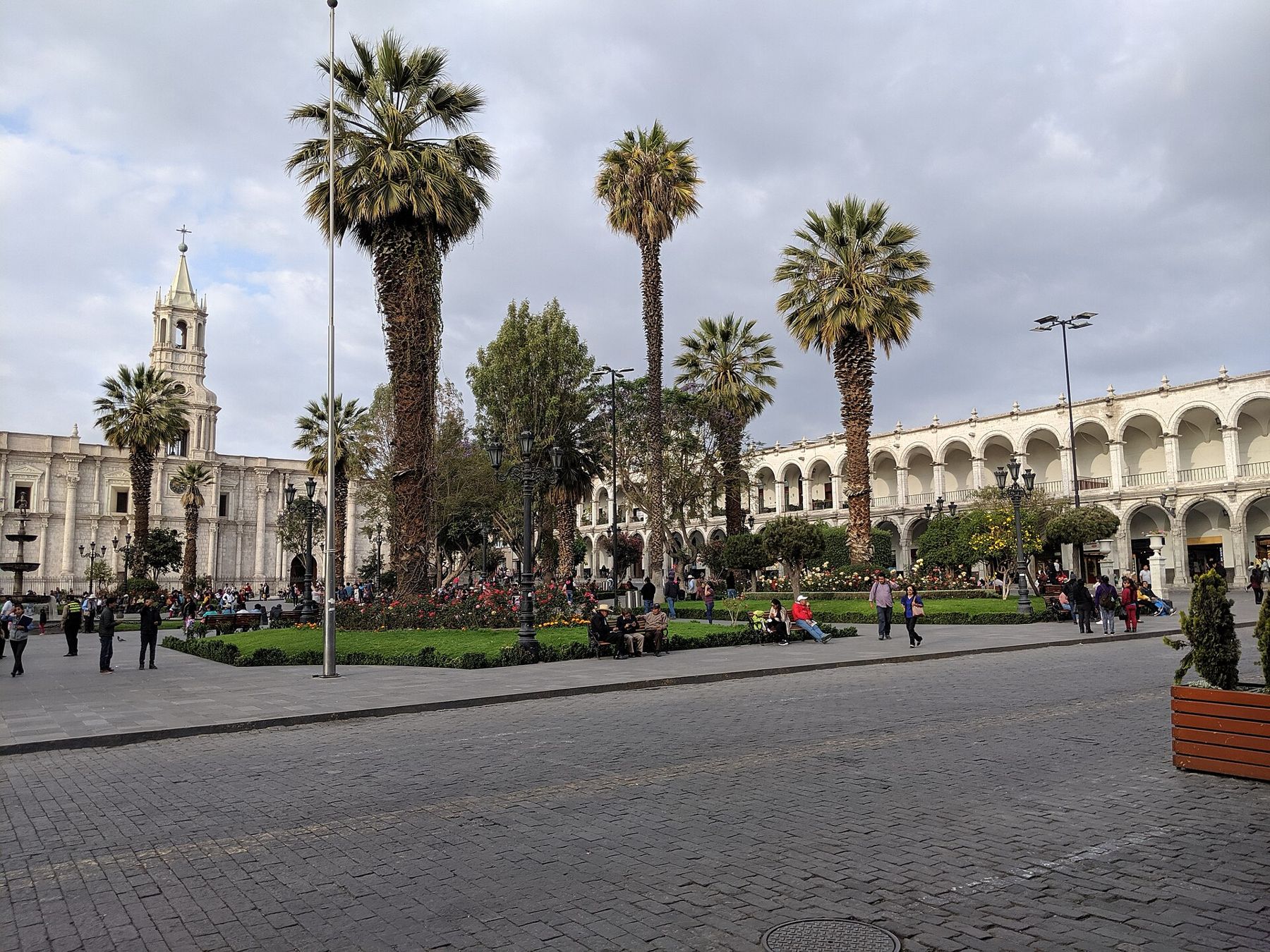
The historic centre was listed by UNESCO in 2000, for the way Spanish and local building traditions mixed in the sillar architecture. Find a bench under the arcades and let the square be your first rest stop. Look up between the palms and you may see the Misti framed above the cathedral towers.
Basílica Catedral
The cathedral fills the whole north side of the plaza, a long, low facade of white stone with two tall towers at the ends. It has been damaged and rebuilt many times. Arequipa sits in an active seismic zone, and fire and earthquakes have struck the building more than once since the colonial period. Much of what you see dates from the nineteenth century. An earthquake in 2001 brought down one of the towers, and it has since been rebuilt.
Inside, the space is light and wide, with a large organ and a carved wooden pulpit. The building tells the story of the city: the stone has been put back up again and again, and each time it has come back white.
Iglesia de la Compañía
At the southeast corner of the plaza stands the Jesuit church, its facade carved in sillar in the late seventeenth century. Look closely at the stone. Among the columns and saints are leaves, flowers, birds and faces carved by local masons in a dense, flat style that mixes European forms with Andean ones, often called mestizo baroque.
Beside the church, the Capilla de San Ignacio has a dome painted inside with tropical plants, fruits and birds. The cloisters next door, with their carved pillars, are now a quiet arcade of shops and cafés; the stone is the attraction, not the commerce.
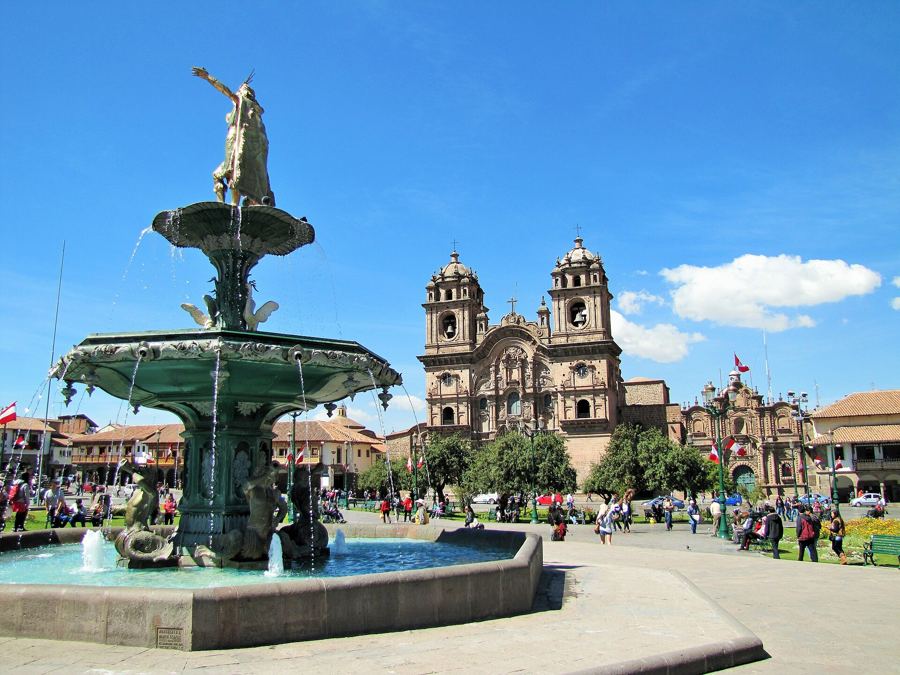 3,400 mCusco, Inca walls under colonial balconies
Monasterio de Santa Catalina
Two blocks north, behind high walls on Calle Santa Catalina, is the Monastery of Santa Catalina, founded for Dominican nuns in 1579. It is not a single building but a small town, with its own streets, squares, fountains, cloisters, kitchens and cells, covering about two hectares. For almost four centuries it was closed to the outside world. It opened to visitors in 1970, and a small community of nuns still lives in one part of it.
The streets are named after Spanish cities: Calle Toledo, Calle Sevilla, Calle Granada. Their walls are painted deep blue and a warm red-orange, set off with pots of geraniums against the white stone. Many of the nuns came from wealthy families, and some lived with servants in private houses within the walls.
Give it at least two hours. The stairs to the upper terraces are short but steep, and at this altitude you will feel them. From the top, you look out over the walls to the city and the Misti beyond. Late afternoon brings the warmest light on the coloured walls.
Puente Bolognesi and the Chili
Head back past the plaza and west along Calle Bolognesi to the river. The Chili runs through a green valley below the city, fed by snowmelt and water from the high country, and its banks are lined with farm plots and trees. Arequipa has always depended on it; the desert begins where the irrigation stops.
The Puente Bolognesi, an old stone bridge, crosses here to the west bank. Pause in the middle. Upstream the valley narrows toward Chachani, and on the far bank the road climbs into Yanahuara.
Mirador de Yanahuara
Yanahuara is a district on a low rise across the river, with a quiet square and the church of San Juan Bautista, its facade carved in the same dense sillar style as La Compañía. On one side of the square stands a row of white arches, each one engraved with lines from Arequipa poets and writers.
Through the arches lies the view the city is known for: the rooftops, the green river valley, and the Misti standing above everything, its cone often streaked with snow. In the late afternoon the stone of the arches turns gold and the volcano turns pink, and the square fills with people waiting for exactly that.
After the walk
Arequipa is known across Peru for its food. Look for rocoto relleno, a hot red pepper stuffed with meat and baked with cheese; chupe de camarones, a rich soup of river shrimp; and queso helado, which despite its name is a cinnamon ice cream sold in the street. The traditional eating houses of the city, known as picanterías, serve them at lunchtime.
Near the plaza, the Museo Santuarios Andinos keeps the remains of a girl sacrificed by the Inca on the summit of Ampato and found by climbers in 1995. It is a quiet, serious place, and a reminder of how high the Inca went to make their offerings.
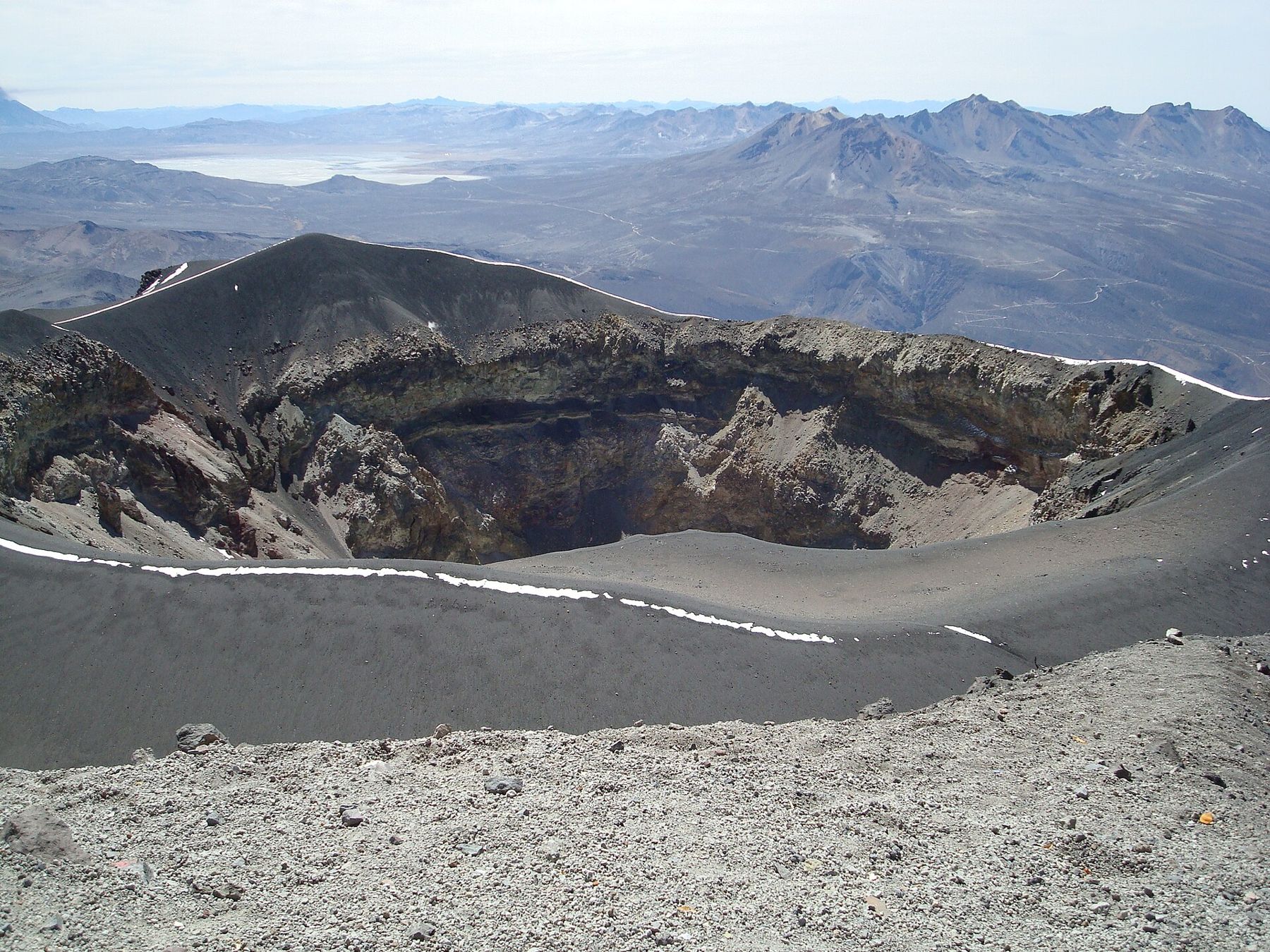
Climbing the Misti itself is a serious expedition, usually two days, to well above 5,000 metres. It is for people who have already spent time at altitude, and it needs a guide, proper gear and full acclimatisation.
From Arequipa, most travellers go higher. The road north climbs to the Colca Canyon and its condors, crossing passes well above 4,000 metres. The road east climbs to Puno and Lake Titicaca on the Altiplano. Cusco, at 3,400 metres, is the gateway to Machu Picchu, which sits almost exactly at Arequipa's height. Spend a day or two here before going up, sleep well, and let the white city do some of the acclimatising for you.