Salvador was founded in 1549 as the capital of Portuguese America, and stayed the capital until 1763, when the seat of the colony moved south to Rio de Janeiro. The founders chose a cliff. The city was built on two levels: the Cidade Baixa, the lower city of docks, warehouses and markets along the Bay of All Saints, and the Cidade Alta, the upper city of churches, convents and government on the ridge above. A steep escarpment separates them, and it is still the first thing you notice.
This is a walk almost at sea level, so altitude does nothing to it, apart from that one sharp rise from the docks to the ridge. Heat and humidity do the rest. Salvador is warm all year, the sun is strong and the sea air is damp; the rainiest months are usually from April to June, when showers come in off the Atlantic. Start early, wear light clothes and shoes with grip for the polished cobbles, and keep the hottest hours for the inside of churches.
Salvador was also one of the largest ports of the Atlantic slave trade. Millions of Africans were brought to Brazil in chains over more than three centuries, and a great many arrived here. Their descendants made Salvador the centre of Afro-Brazilian culture: in its religion, Candomblé; in capoeira; in its music and drumming; and in its cooking, with palm oil, coconut and dried shrimp. The walk passes through all of that history.
Mercado Modelo
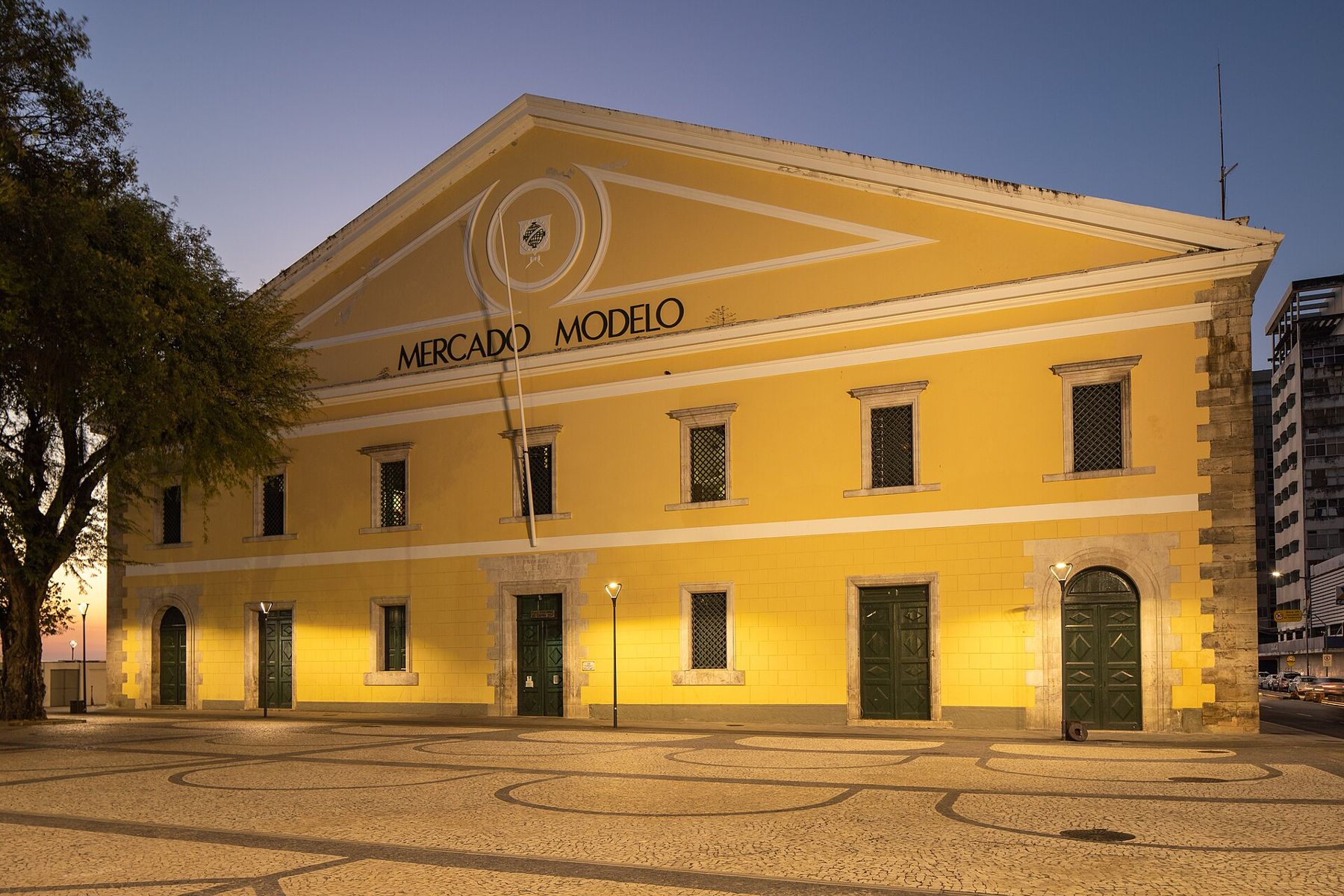
Begin in the lower city at the Mercado Modelo, a large yellow building facing the bay. It stands in the old customs house, and today holds two floors of craft stalls: carved wood, lace, leather, percussion instruments and ribbons. Outside, on the broad paved square, capoeira players sometimes perform to the sound of the berimbau, a single-string bow with a gourd that sets the rhythm of the game. Bargaining is normal; a smile helps more than haste.
Elevador Lacerda
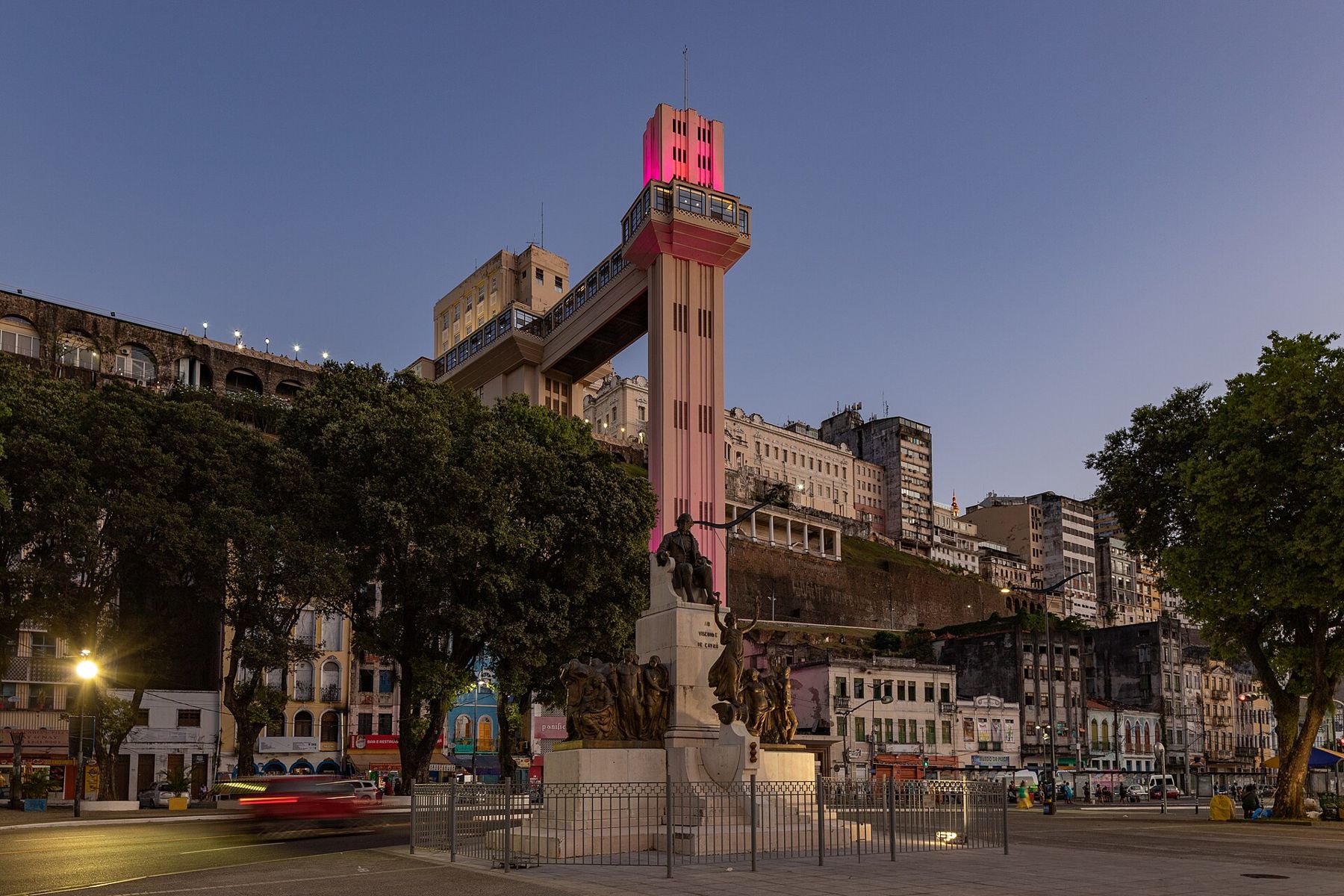
Across the road rises the reason the lower city and the upper city can be one place. The Elevador Lacerda is a public lift that climbs the escarpment in a pale art deco tower. The first lift here opened in 1873, and the present tower dates from 1930. The ride is short and the fare is small, and the doors open on the upper city about seventy metres higher, with no sweat at all.
The alternative is the ladeiras, the steep old streets that climb the escarpment on foot. They are interesting in daylight but not all of them are safe or easy, and the lift is the obvious, everyday choice. Queues can build at peak hours.
Praça Tomé de Sousa
The lift delivers you onto Praça Tomé de Sousa, named for the first governor-general of Brazil. Around the square stand the Palácio Rio Branco, the old seat of government, with its dome, and the modern city hall. Walk to the balustrade at the edge. The bay opens below in a single sweep: the roofs of the lower city, the market, the harbour, and the Bay of All Saints running out to the island of Itaparica on the horizon. In the late afternoon this is one of the best views in the city, and the breeze off the water is the coolest air you will feel on the walk.
Terreiro de Jesus
Walk east along the ridge through the streets of the old city to the Terreiro de Jesus, a broad square shaded by trees and lined with churches. The largest is the Cathedral Basilica, the former Jesuit church, its facade of pale stone said to have been shipped from Portugal. The Jesuits ran their college here. Across the square, other churches face it, and a fountain stands in the centre.
This is where the historic centre, inscribed on the UNESCO World Heritage list in 1985, begins in earnest: steep streets of colonial houses painted in strong colours, wooden balconies, iron lamps. It is busy by day with visitors, sellers and drummers rehearsing. Hawkers will offer ribbons and photos; a firm, friendly no is enough.
 2 mCartagena inside the walls
Church and Convent of São Francisco
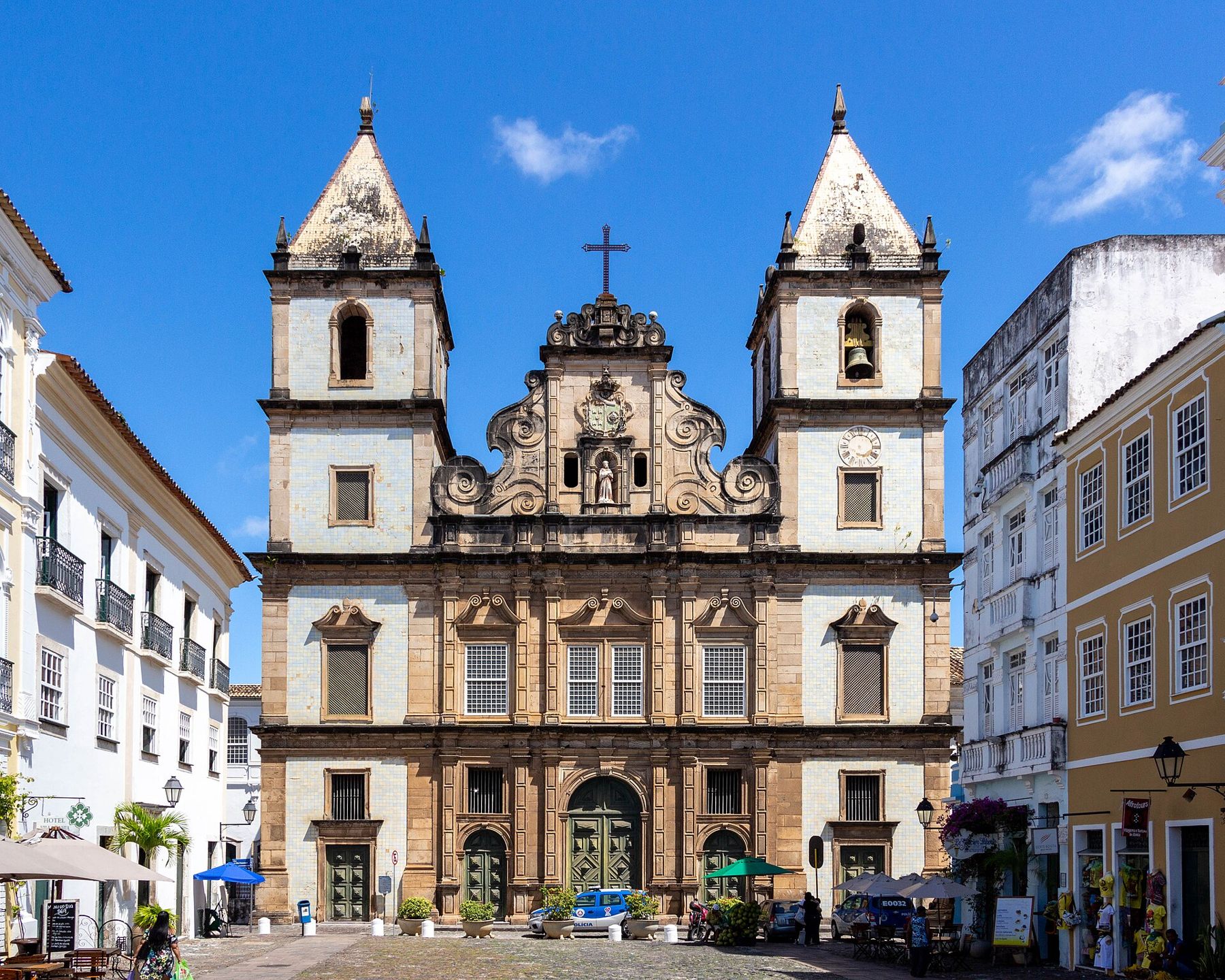
A short walk on, at the end of its own small square with a stone cross, stands the Church of São Francisco. The front is restrained, with two towers and a carved stone pediment. The inside is not. The nave is covered almost entirely in carved wood and gold leaf, a dense baroque of vines, angels and faces, so that in the dim light the whole church seems to glow. It is one of the richest baroque interiors in Brazil.
The cloister of the convent next door is lined with blue and white Portuguese tiles, azulejos, painted with scenes and moral sayings. Take your time; it is cool and quiet, and the heat outside can wait. Note that both the gold and the tiles were paid for by a colonial economy built on sugar and slavery.
Largo do Pelourinho
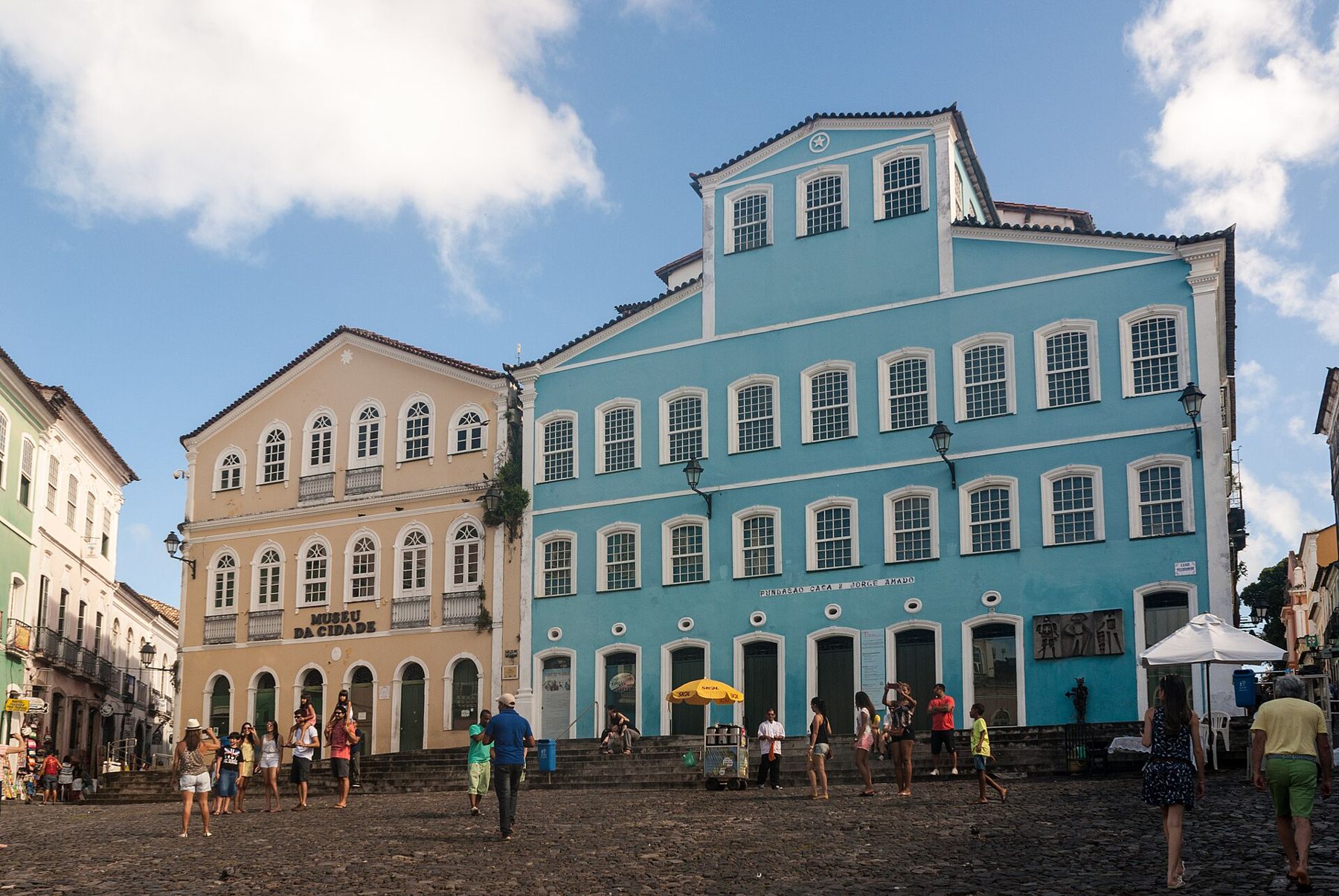
Walk down the slope to the Largo do Pelourinho, the triangular square that gave the old city its name. A pelourinho was a whipping post, and the name remembers the public punishment of enslaved people here. Today the square is lined with pastel houses, and on its lower side stands the blue church of Nossa Senhora do Rosário dos Pretos, built over the eighteenth century by and for a brotherhood of Black Catholics, enslaved and free. Its Masses often carry the sound of drums.
Above the square, a blue house holds the foundation named for Jorge Amado, the Bahian novelist, with his books and papers. In the evenings the square and the streets around it fill with music. Keep an eye on bags and phones in crowds, take only what you need, and after dark use a taxi rather than walking through emptier streets.
Santo Antônio Além do Carmo
From the Pelourinho the ridge carries on north, up the Ladeira do Carmo and past the Carmelite church, to Santo Antônio Além do Carmo, the quarter "beyond the Carmo". It is quieter, more residential and greener than the Pelourinho, with houses turned into small guesthouses and a square that looks out over the bay. In the evening, families sit outside, and children play football on the cobbles. Walk to the edge of the square for the last view of the water.
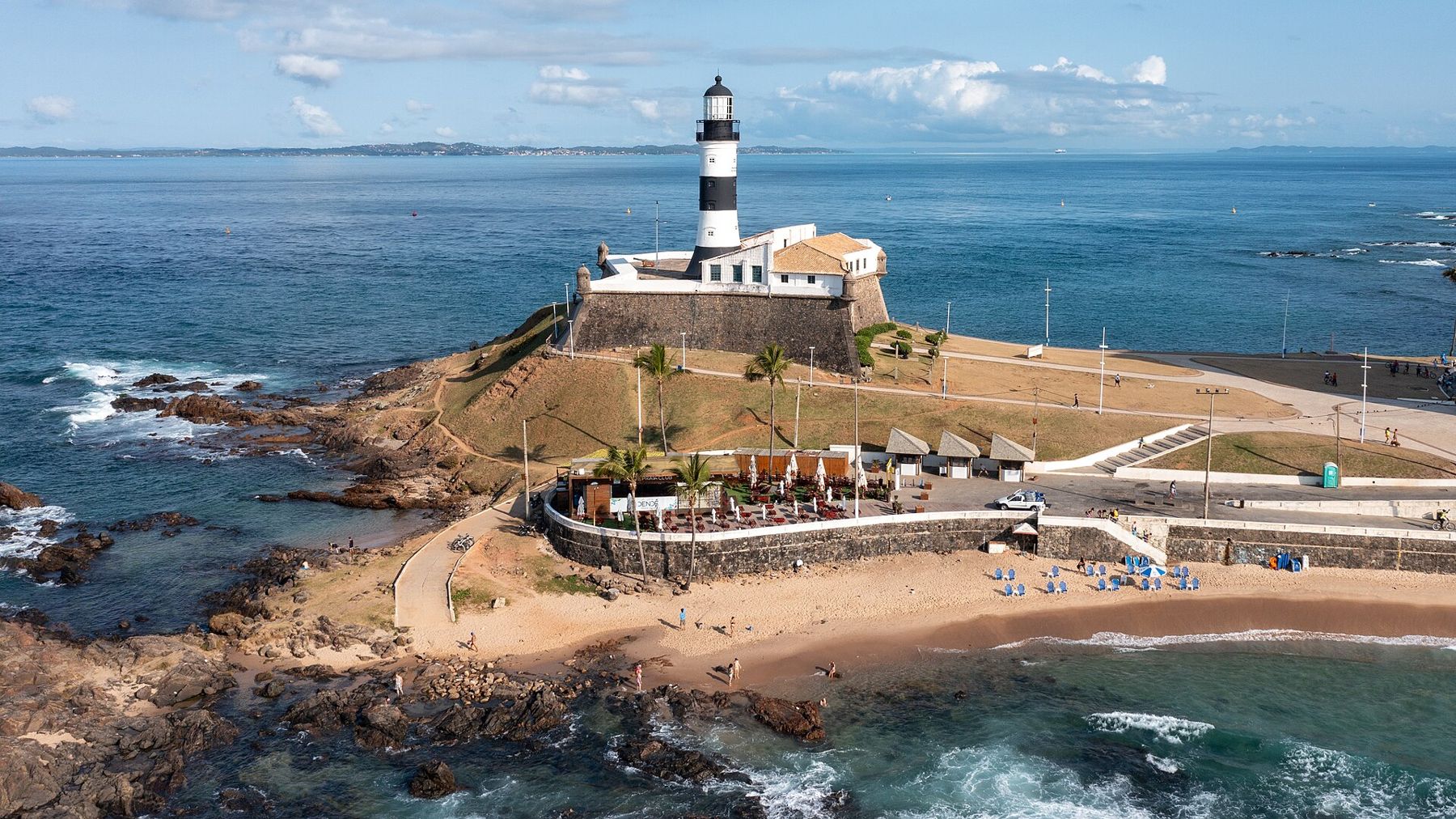
Come back the same way, or take a taxi down. For the rest of the city, the Atlantic beaches lie south: the old fort and lighthouse at Barra, where the bay meets the ocean, and the neighbourhood of Rio Vermelho, where the fishermen honour Iemanjá, goddess of the sea, each February.
On from Salvador
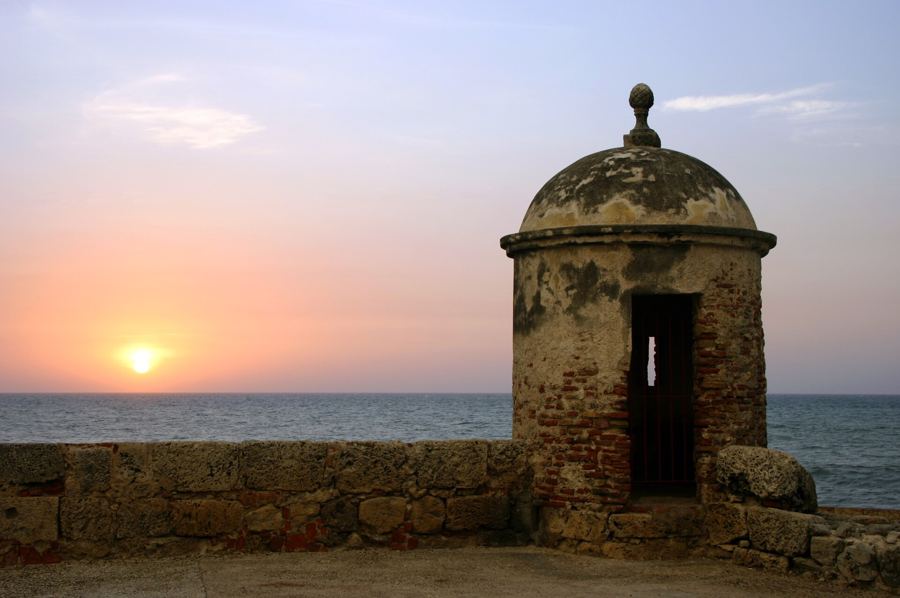
Salvador is warm, wet and low, like most of the coast. South along the Atlantic, Rio de Janeiro took over as capital and kept the same pairing of rock and sea. Another colonial port built on the Atlantic trade stands in the north of the continent, in Cartagena's walled city, with the same heat. Inland and north, the Amazon at Manaus is wetter still. For the common-sense safety notes that apply to all three, see money and staying safe.