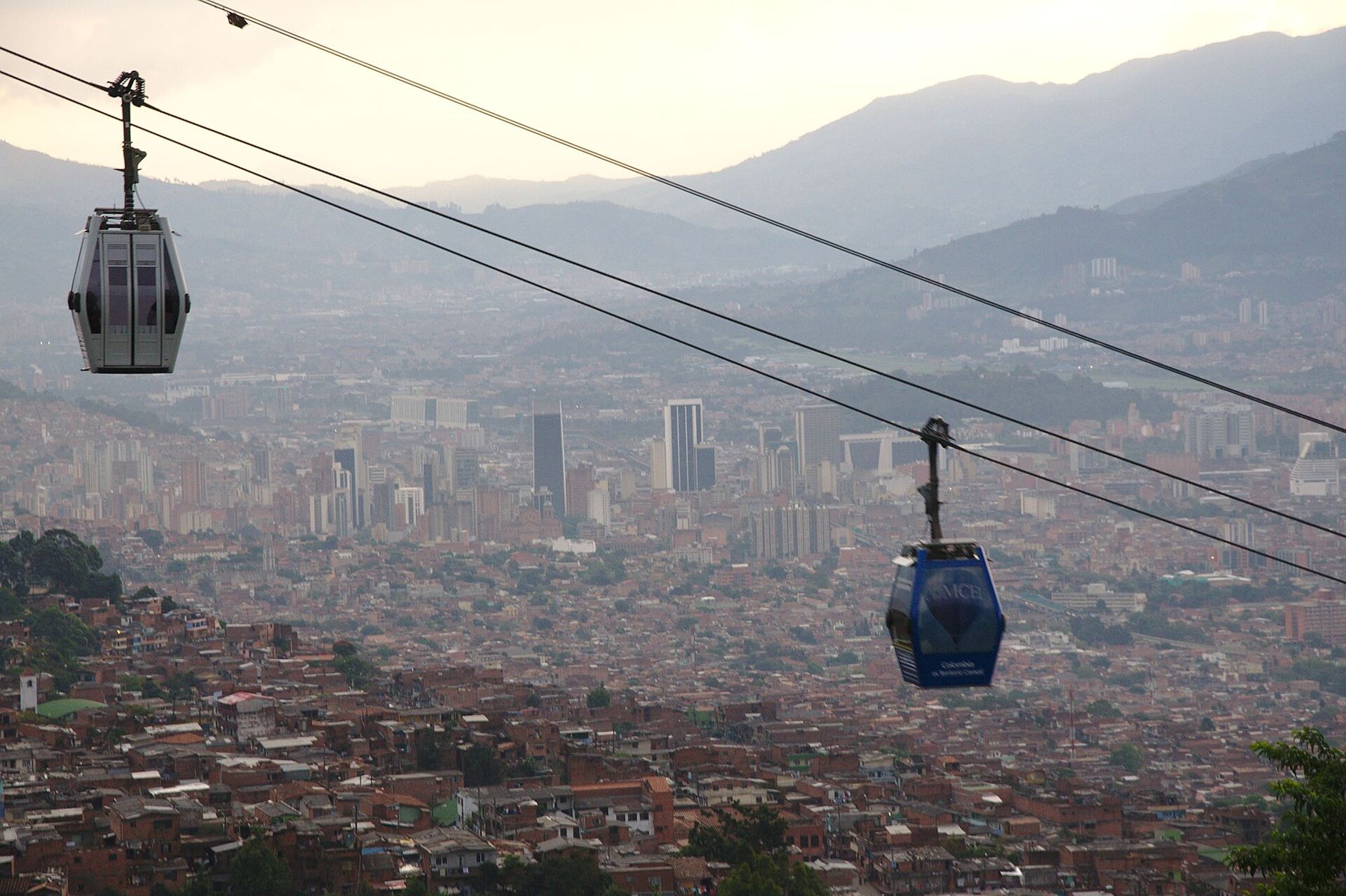
Medellín fills a valley that runs roughly north to south, with the Medellín River down the middle and steep green walls on either side. The towers of El Poblado and the city centre sit on the flat ground. The brick houses climb the slopes, layer on layer, until they meet the cloud. From almost anywhere in the city you can look up and see where people live, and from almost anywhere on the slopes you can look down and see the whole valley at once.
The city stands at 1,495 metres. That is high enough to take the edge off tropical heat and low enough that most visitors never think about the altitude at all. Its nickname, the city of eternal spring, is fair: the days are warm, the nights are cool, and the temperature barely moves through the year.
A valley at spring temperature
The air here carries roughly 85 percent of the oxygen you breathe at sea level. You will not feel it on the flat. You may feel it on the hills, where streets turn into staircases and a short climb leaves you breathing harder than you expected. The sun is the bigger issue. Medellín is about six degrees north of the equator, and the light at midday is strong even when the sky looks soft and white. Wear a hat, carry water and keep sunscreen in your bag.
Rain comes in two main seasons, roughly April to May and October to November, usually as afternoon showers that clear by evening. December to March and the middle of the year are drier. A light jacket covers the evenings; nobody here needs a heavy coat.
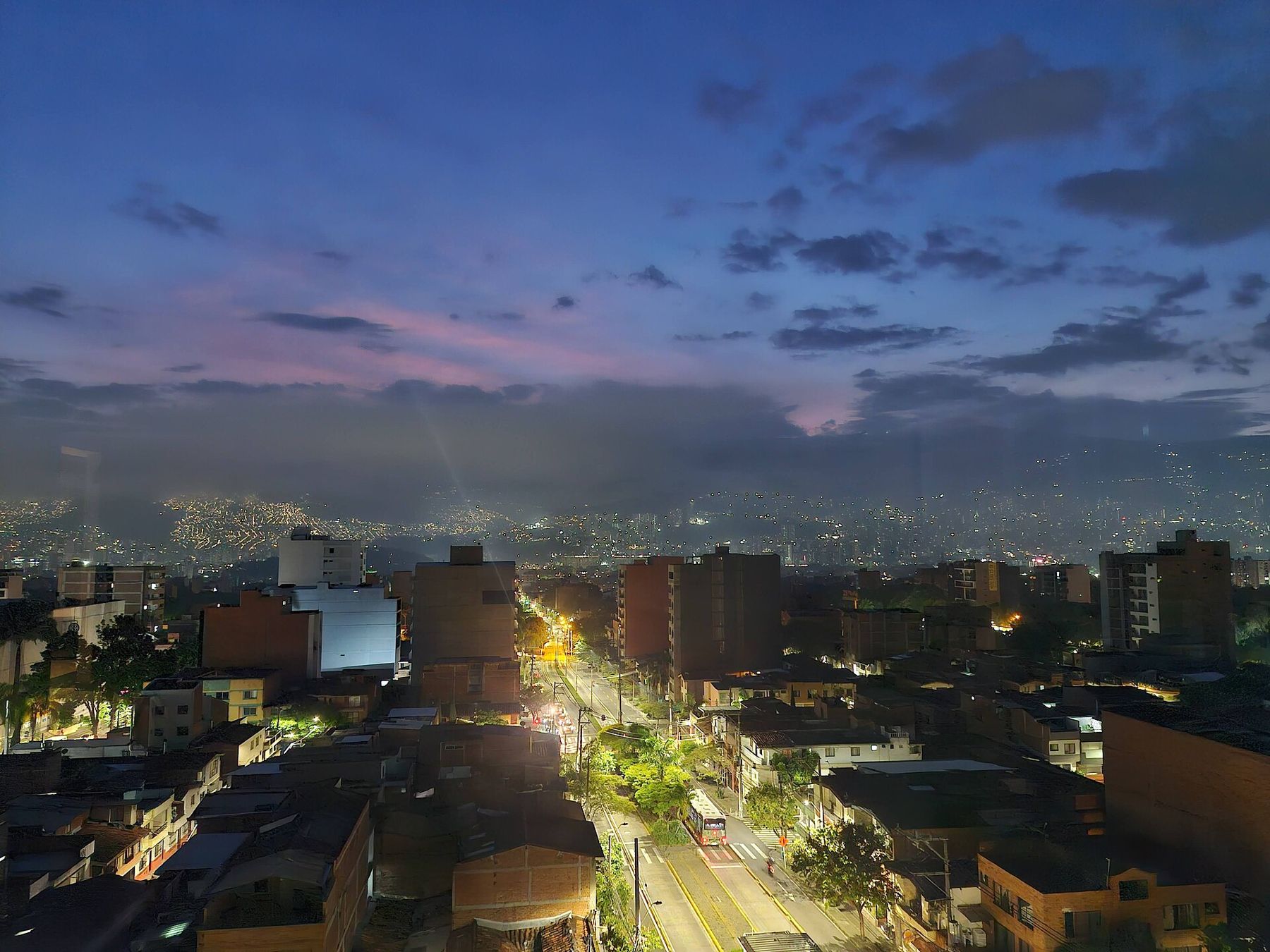
Pace the first day by the valley's own rhythm. Mornings are clear and fresh, the best time for the hillside neighbourhoods. Afternoons can bring cloud and showers, a good time for museums. There is no need to rest on arrival, but the steep stairs of the comunas are real exercise, so take them slowly.
Up the Metrocable
The Medellín Metro opened in 1995, the first metro in Colombia, and it runs largely on elevated tracks along the valley floor. The trains are clean and quiet and the stations are kept that way; people in the city speak of the metro with a pride that visitors notice quickly.
The idea that changed the city's map came in 2004. Line K of the Metrocable, one of the first cable car lines anywhere to be run as everyday public transport, left Acevedo station and climbed the northeastern slope to Santo Domingo Savio. Before it, people living near the top faced a long walk or a slow bus ride down steep, crowded streets to reach the metro. The cable car turned that into a short ride over the rooftops, connected to the trains.
Other lines followed. Line J climbs from San Javier station on the western side, above Comuna 13. Line L continues from Santo Domingo over the ridge to Parque Arví, a large area of forest and trails on the plateau above the valley, where the air is noticeably cooler.
From the cabin you see a city most visitors never walk through: laundry on rooftops, football pitches cut into the hill, children walking home in uniform.
Ride Line K from Acevedo in the morning. The gondola lifts off and the valley opens behind you, the river and the towers shrinking as the brick houses rise to meet the cabin. From the cabin you see a city most visitors never walk through: laundry on rooftops, football pitches cut into the hill, children walking home in uniform. The cabins are small, and you will often share one with people going home or to work. This is their commute, so give up a seat when it is busy and keep your camera polite.
At Santo Domingo, step out and look back. The whole Aburrá Valley lies below, the towers of the centre in the middle distance, the river a grey line through the middle.
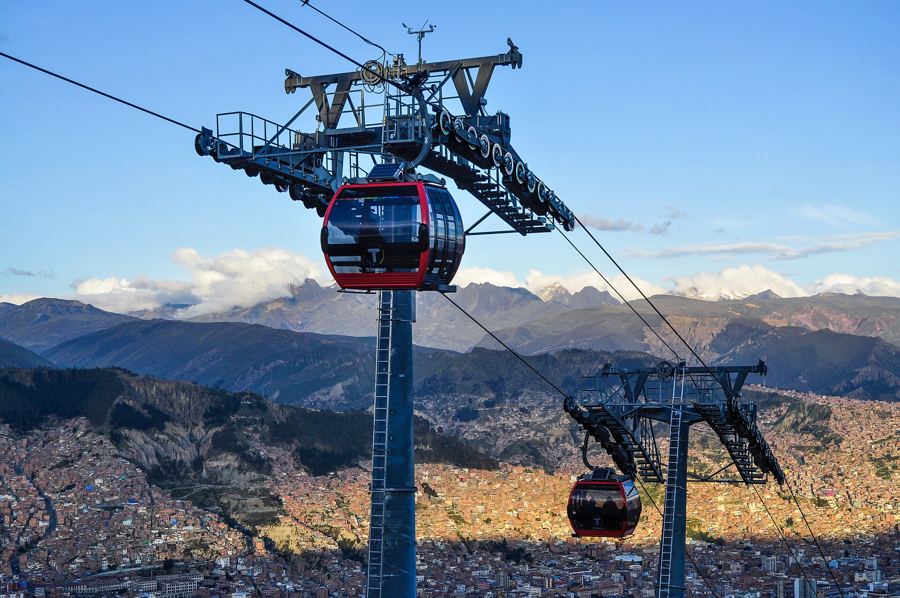 3,640 mLa Paz, the city that rides the air
The 1990s, told plainly
For a long time Medellín was known abroad for violence. In the late 1980s and early 1990s the city had one of the highest murder rates of any city in the world. The cocaine trade, the Medellín cartel led by Pablo Escobar, urban militias, guerrilla groups and paramilitaries all fought over the city and its hillside neighbourhoods. Escobar was killed by security forces in Medellín in December 1993, but the violence in the comunas went on for years after.
The changes since then came from many directions: security operations, some of them disputed; local politics; and heavy public investment in the poorest districts, including transport, libraries, schools and parks. The cable cars were part of that investment. Violence fell sharply, though it has not disappeared, and people in the city hold a range of views about how the change happened and what it cost.
Many residents would rather not see their city's history turned into a tourist theme. Tours built around the cartel era are widely disliked in Medellín, and this guide does not recommend them. The museums and memorial spaces in the city tell the story from the side of the people who lived through it.
Comuna 13 and the escalators
Comuna 13, also called San Javier, climbs the western slope. In the early 2000s it was one of the most contested parts of the city, and in October 2002 the state launched a large military operation there, Operation Orión. People in the neighbourhood still mark that time, and the search for those who disappeared during those years has continued.
In 2011 the city opened a run of covered outdoor escalators up the hillside, in several sections, replacing a long, steep climb on foot for the people living above. Around them, local artists painted the walls. The murals tell the neighbourhood's own story: memory, loss, music, hope, and a good deal of humour.
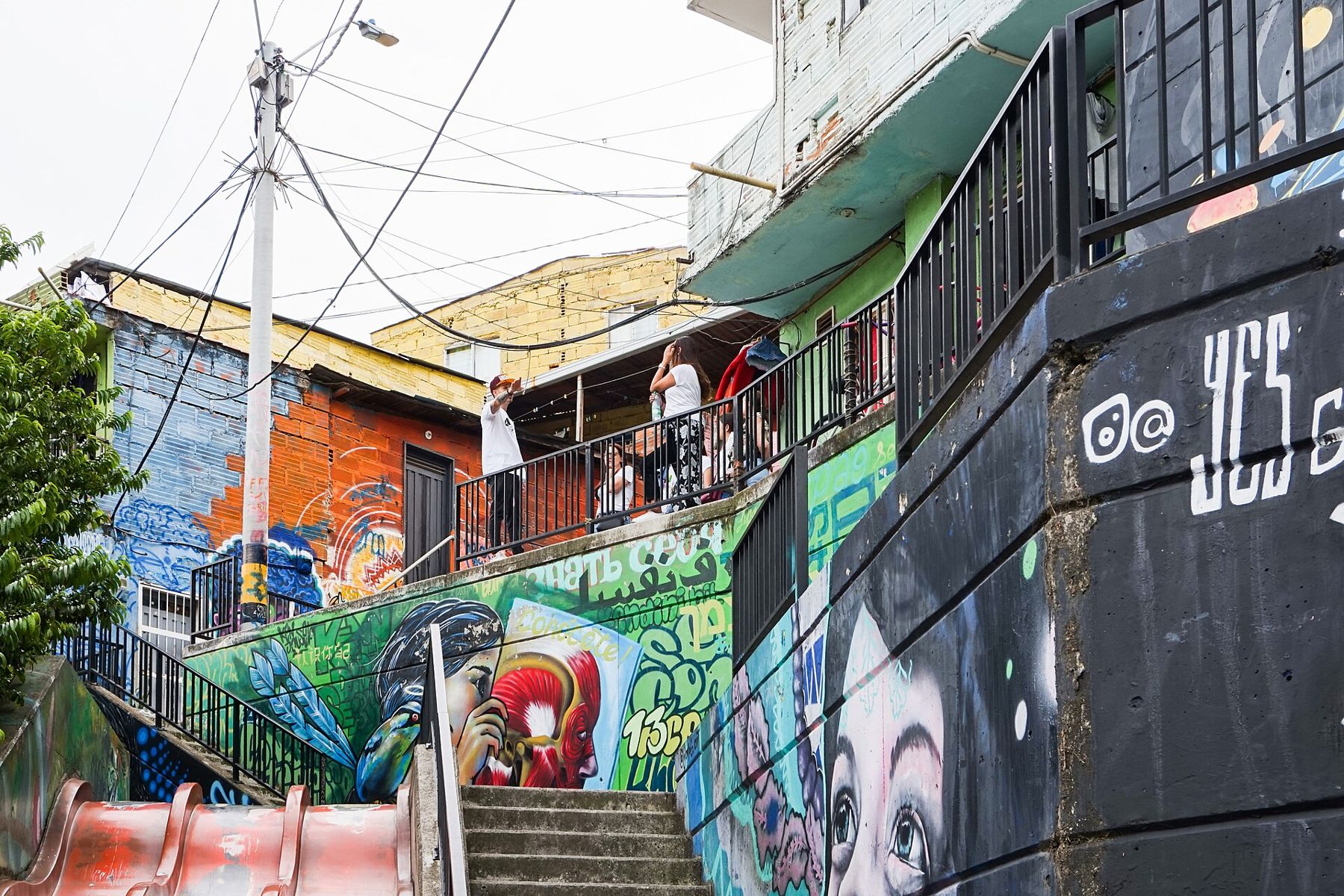
Today Comuna 13 is one of the most visited places in Medellín. Hip hop dancers perform on the landings, small stalls sell fruit and cold drinks, and the alleys are crowded at weekends. Residents run walking tours that explain the murals, and they are the best way to visit; the money stays in the neighbourhood and the stories come from people who know them.
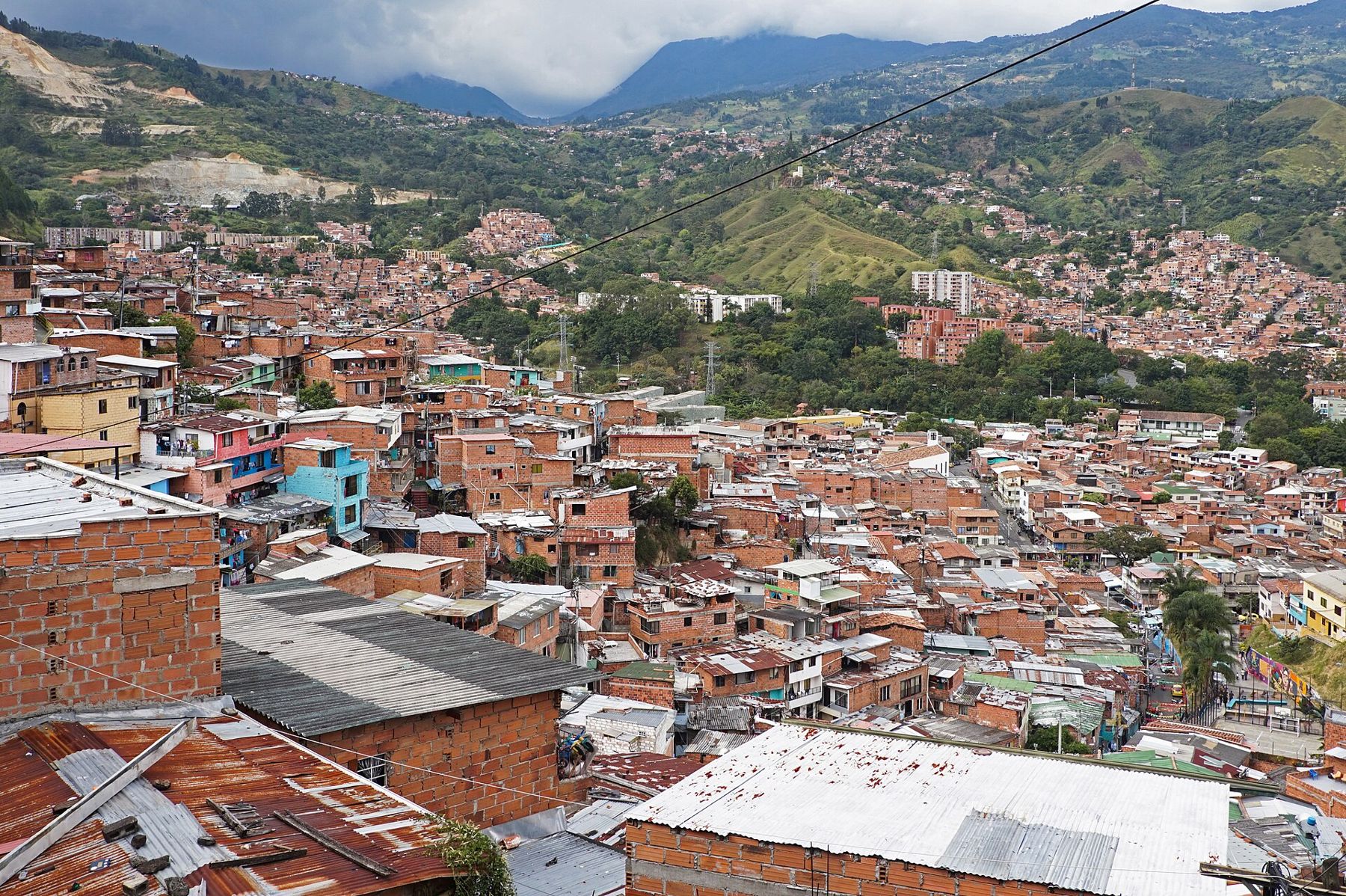
Go in the morning, before the heat and the crowds. Remember that this is a neighbourhood first: people live behind the painted walls, so ask before photographing anyone.
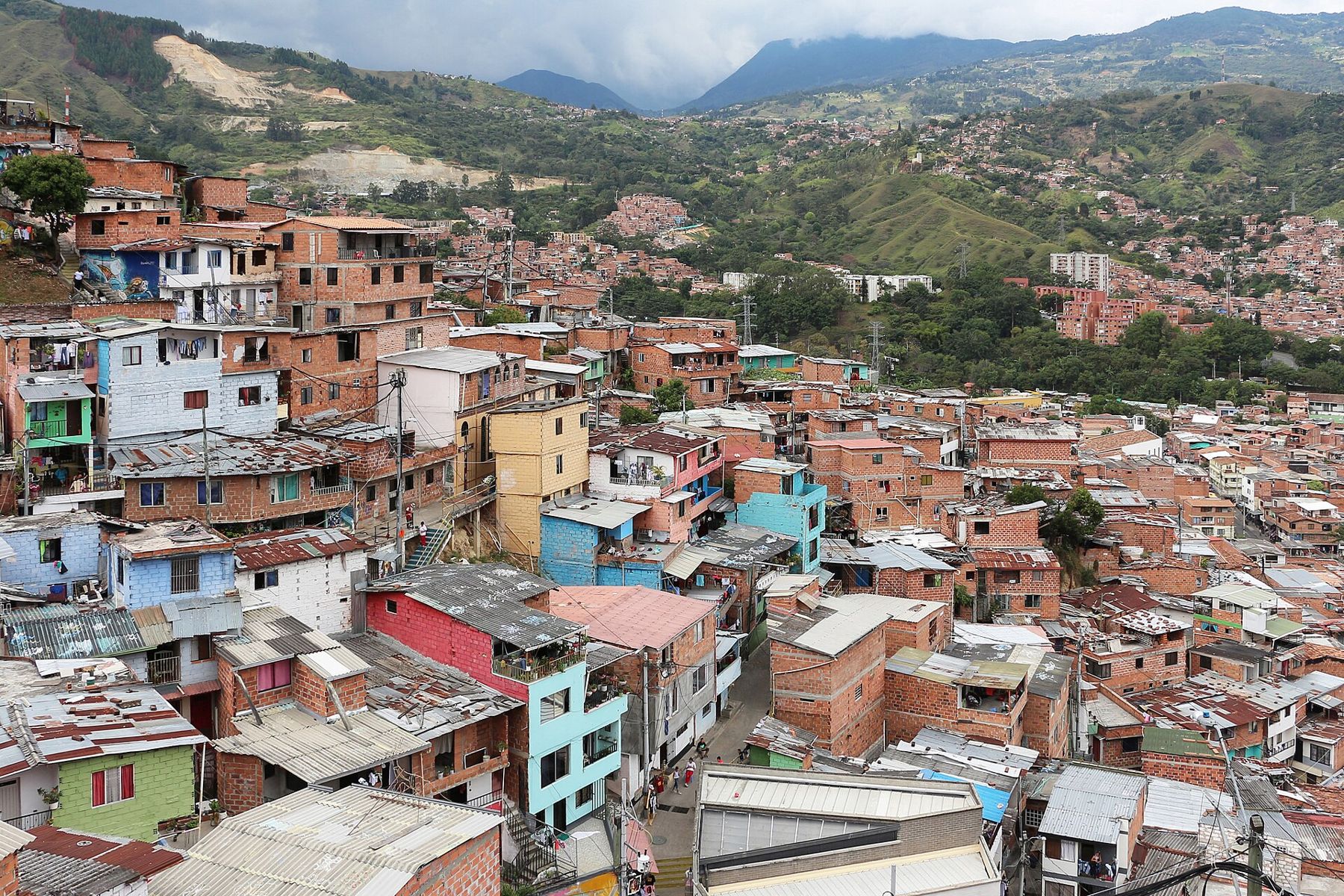
Plaza Botero and the centre
Down on the valley floor, the old centre is loud, busy and full of street traders. Plaza Botero sits beside the Museo de Antioquia, with 23 large bronze sculptures donated by Fernando Botero, the painter and sculptor born in Medellín in 1932. His figures are rounded and heavy: a horse, a Roman soldier, a reclining woman, a cat. People sit in their shade, touch them for luck and pose with them.
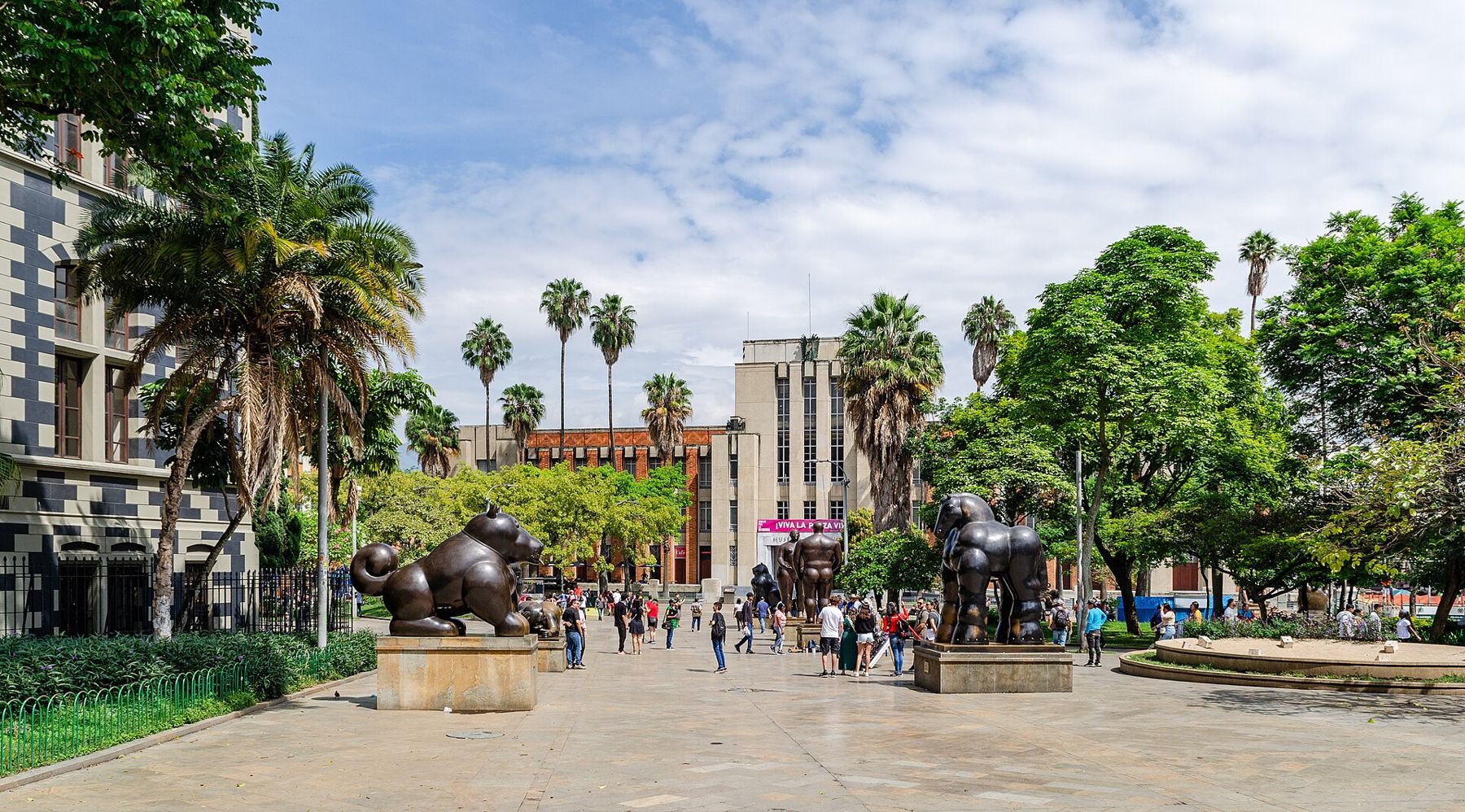
The black-and-white chequered building on the plaza is the Palacio de la Cultura Rafael Uribe Uribe, a Gothic Revival design from the early twentieth century. The Museo de Antioquia holds a large collection of Botero's paintings alongside older art from the region.
A few blocks south, in Parque San Antonio, stand two of Botero's bronze birds. In 1995 a bomb hidden under the first killed many people at a concert in the park. Botero asked that the broken bird be left where it was, and he placed a new, whole one beside it. The two stand together still.
Keep your phone in your pocket in the centre and watch your bag in crowds, as you would in any big city. Go by day; the area empties after dark.
How to spend the days
Two or three days give you the valley. One morning on Line K up to Santo Domingo and on to Parque Arví for a walk in the forest. One morning in Comuna 13 with a local guide. One afternoon in the centre, with Plaza Botero, the museum and the old Parque Berrío beside the metro.
In August the Feria de las Flores fills the city. Its centrepiece is the parade of silleteros, flower growers from the hills of Santa Elena who carry huge arrangements on wooden frames strapped to their backs, a tradition going back to the days when flowers came down to market that way.
The food is Antioquian and filling. The bandeja paisa, a plate of beans, rice, ground meat, pork crackling, egg, plantain and arepa, is the regional standard. Arepas come with almost everything, and the coffee is grown not far away.
Where the profile goes next
Medellín sits in the middle of the valley band. Fly south to Bogotá and you climb more than a thousand metres to the cool high savanna and the colonial streets of La Candelaria, where the first day does need a slow start. Head south by road through the coffee country and you reach Salento and the wax palms of the Cocora Valley, a little higher and a good deal wetter. Go north to the Caribbean and the air turns hot and heavy in Cartagena's walled city, almost at sea level.
Before you leave, take the cable car once more at dusk. The valley floor turns gold, the lights come on up the slopes one house at a time, and the whole city seems to climb toward you.