Bogotá spreads across the Sabana de Bogotá, a high, flat plateau in the eastern range of the Andes, at 2,640 metres. On its eastern edge the mountains rise abruptly, green and steep, with the white church of Monserrate perched on top. At their foot lies La Candelaria, the oldest part of the city: a grid of narrow streets climbing toward the hills, lined with colonial houses with tiled roofs, wooden balconies and heavy doors, many of them painted in deep colours and covered in murals.
Bogotá is a cool city. At this height the days are mild at best, the nights are cold, and the sky can change from blue to grey to rain in an hour. The air holds about three quarters of the oxygen you breathe at sea level, and many people feel it on the first day: a slight headache, poor sleep, shortness of breath on the steep streets. Take it slowly. Walk on the flat on your first afternoon, drink water, go easy on alcohol, and save Monserrate for the second or third day.
The sun is strong when it comes out, even when the air feels cold. Dress in layers: a sweater, a rain jacket, a hat and sunscreen. Rain falls in every month, most heavily in two seasons, roughly April to May and October to November.
The walk below covers La Candelaria and its edges, about three kilometres on foot, with a ride or a long climb to Monserrate at the end. The streets run uphill to the east, so take your time. Go in daylight, keep your phone and wallet out of sight, and use taxis after dark.
Plaza de Bolívar
The city's great square is broad, paved and open, crowded with pigeons, schoolchildren, vendors and protesters. A bronze statue of Simón Bolívar stands near the middle. Around the edges stand the institutions of the state. On the south side is the Capitolio Nacional, the seat of Congress, a long neoclassical building of grey stone that took the best part of a century to complete. On the north is the Palace of Justice, home of the country's highest courts. The original building was destroyed in 1985, when M-19 guerrillas seized it and the army retook it by force; around a hundred people died, among them eleven Supreme Court justices. The building that stands there now was raised in its place.
The Spanish founded Bogotá in 1538, on land of the Muisca people. The square has been the centre of the city's public life ever since.
Catedral Primada
The cathedral fills much of the plaza's east side. The present building, with its pale stone facade and twin towers, dates from the early nineteenth century, built on the site of earlier churches. Inside, it is large, calm and plain by colonial standards. Next to it, the smaller Capilla del Sagrario is richer, with paintings and a gilded altar.
From the cathedral steps, look east. The streets run straight up the slope to the mountains, and the cable car and funicular lines to Monserrate climb the ridge above them.
Museo Botero
A block or two east, on Calle 11, a colonial house with a wide patio holds the Museo Botero. Fernando Botero, born in Medellín, gave the collection to the country in 2000: a large set of his own paintings and sculptures, with their round, heavy figures, and his collection of works by European artists, from Picasso to Monet. It is one of the most visited museums in the city, and among the most relaxed.
Next door, the old Casa de Moneda, the colonial mint, is part of the same complex and covers the history of Colombian money.
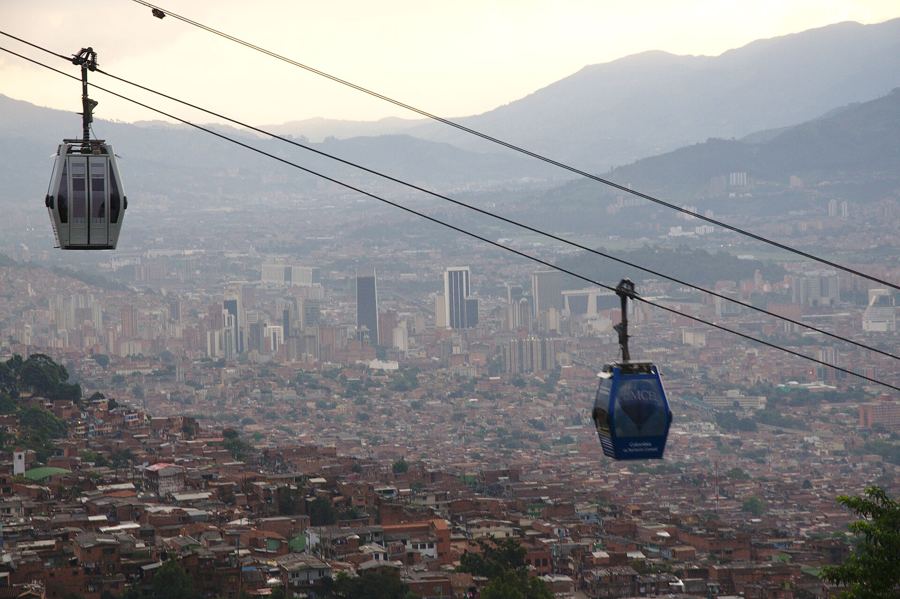 1,495 mMedellín, where the metro takes to the air
Iglesia de La Candelaria
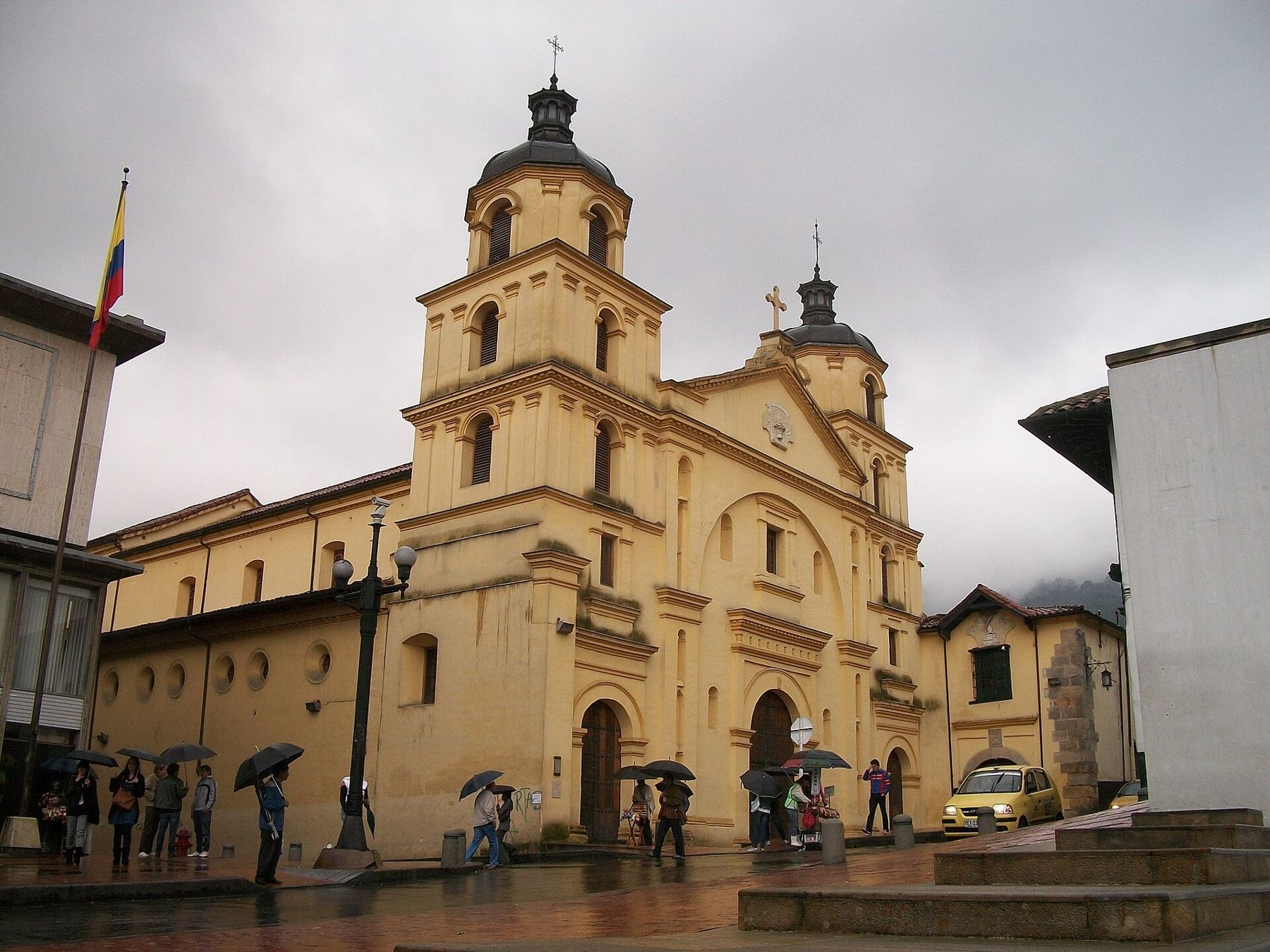
A short way farther along, the church of La Candelaria gave the district its name. Its pale yellow facade and bell tower stand over a small square, and inside it holds colonial paintings and carved wooden altars. It is a quiet place, and an easy stop to catch your breath.
Around it, the streets show La Candelaria as it lives: university students heading to class, small shops, workshops, people selling fruit and coffee from carts. Many of the walls are covered in street art, some of it commissioned, much of it not, and it changes constantly.
Chorro de Quevedo
Climb northeast through the narrow streets to the Chorro de Quevedo, a small, sloping square with a little white chapel. By tradition it is where the city was founded, beside a spring. Whether or not that is exact, it feels like a beginning: a meeting place of students, street performers and musicians, with small bars and cafés in the side streets around it.
Just off the square, the Calle del Embudo is a narrow alley that narrows like a funnel, covered in murals. People in the area sell chicha, a traditional fermented maize drink once banned by the authorities and now proudly served again.
Museo del Oro
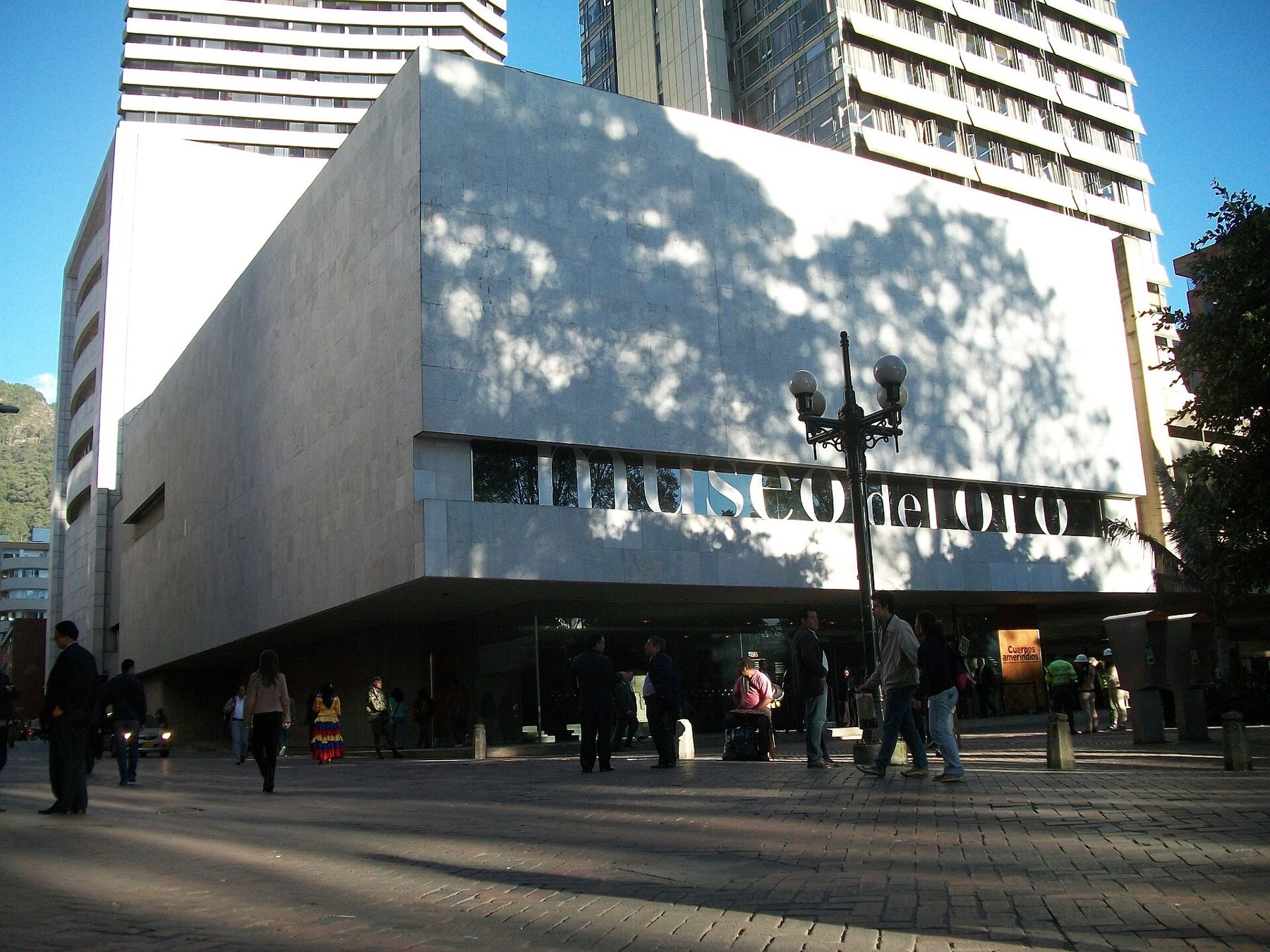
Walk downhill to the Avenida Jiménez, where a stone water channel runs along the road, and follow it west to the Parque Santander. On its edge stands the Museo del Oro, the Gold Museum, run by the central bank. It holds one of the largest collections of pre-Hispanic goldwork in the world, tens of thousands of pieces made by the many peoples who lived in what is now Colombia.
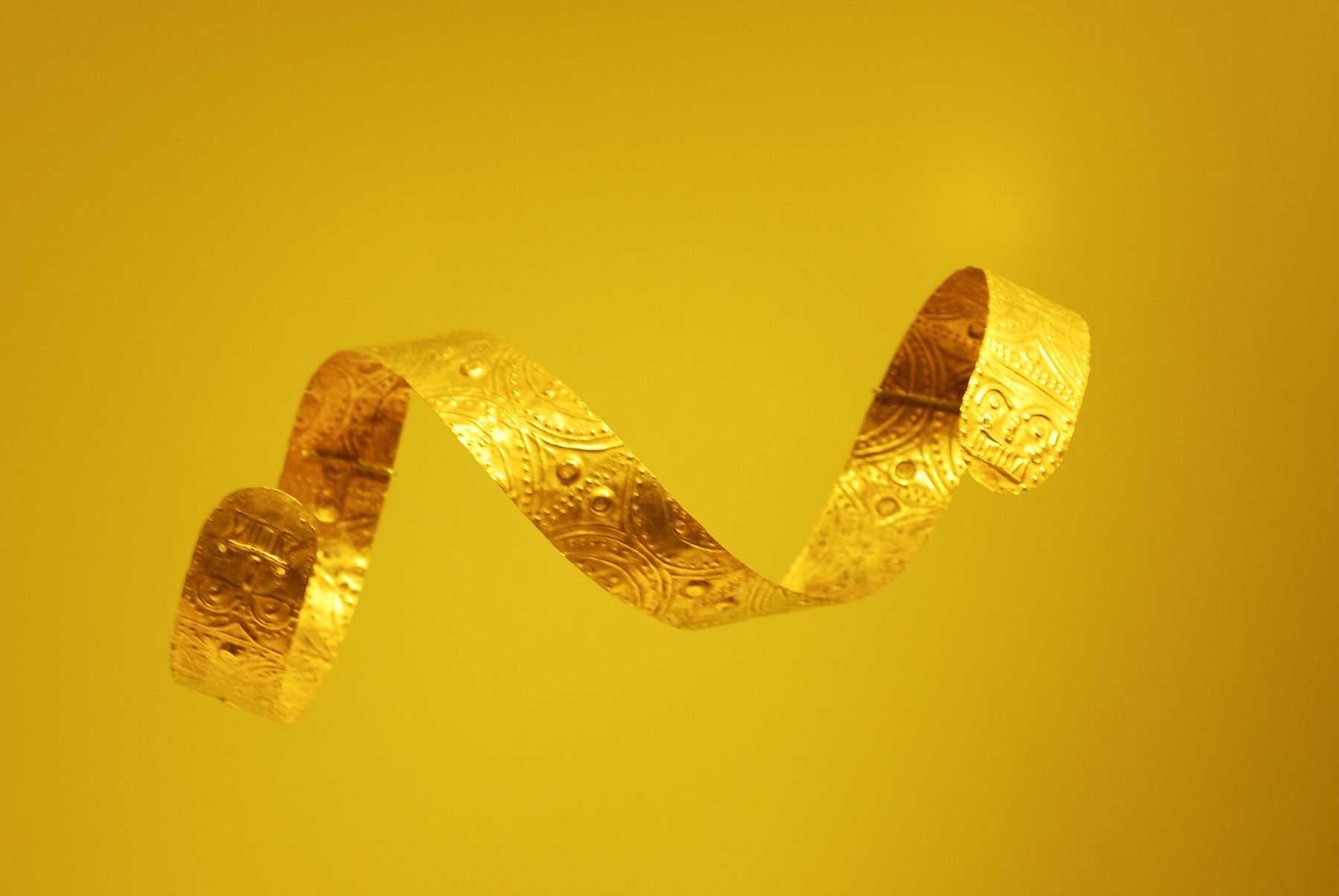
The objects range from tiny earrings and nose ornaments to large breastplates, masks, figures of birds, frogs and jaguars, and the trays and vessels used in ceremonies. Most of them were made for ritual, for offering to the gods or for marking rank, not as money.
The most famous object is the Muisca raft, a small gold figure of a chief on a raft surrounded by attendants. It recalls the ceremony behind the legend of El Dorado, in which a new Muisca ruler, covered in gold dust, was rowed out on Lake Guatavita to make offerings to the waters. Upstairs, a dark room fills with light to show a mass of gold offerings at once, as they might have glowed in the lake.
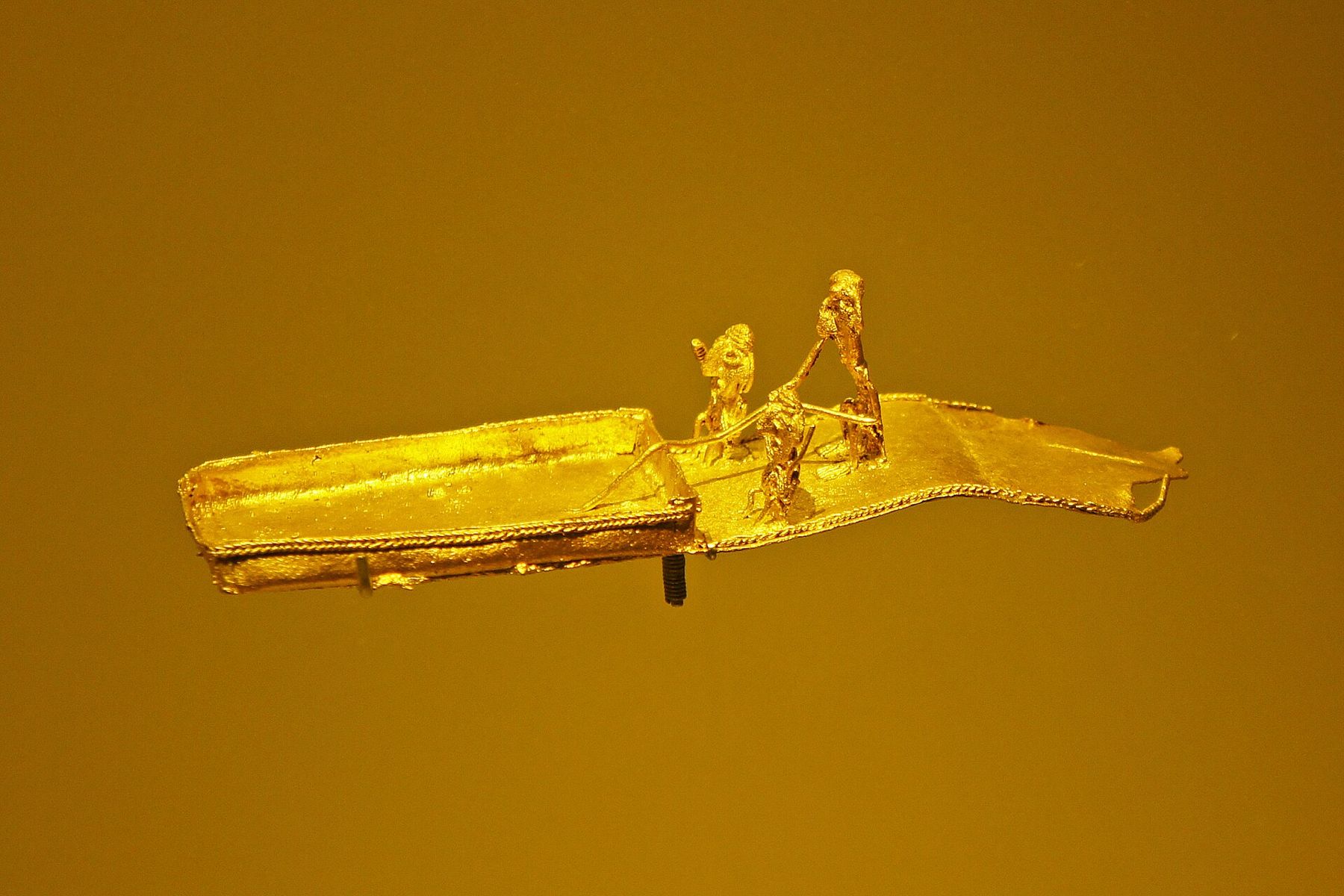
Allow at least two hours. The museum is a good place to spend a cold or rainy afternoon.
Monserrate
Above the city, on the ridge to the east, the white church of Monserrate sits at more than 3,100 metres, some 500 metres above La Candelaria. It is a sanctuary dedicated to the Señor Caído, the Fallen Christ, and has been a place of pilgrimage since the colonial period.
There are three ways up: a funicular railway, a cable car, or a stone path of steep stairs that climbs straight up the mountainside. The path is popular with pilgrims and runners, especially at weekends. On foot, the climb is hard work at this altitude, and you will feel it in your chest. Do not attempt it on your first day, walk it only in daylight when it is busy, and turn back if you feel unwell.
At the top, the whole Sabana lies spread out below: the old centre, the towers of the business districts, and the city running north and west to the edge of sight. The air is thin and cold and the wind blows hard; bring a jacket. In the late afternoon the city turns gold, then grey, and then the lights come on.
After the walk
Bogotá's dish is ajiaco, a soup of chicken, corn and several kinds of potato, flavoured with a local herb called guascas and served with capers, cream and avocado. It is made for cold afternoons, and La Candelaria is full of places that serve it. Hot chocolate with cheese melted into the cup is another local habit.
On Sundays, many main roads close to traffic for the ciclovía, and the city fills with people on bicycles and on foot. It is the best day to see Bogotá at ease.
From Bogotá, the profile drops west to the coffee country of Salento and the wax palms and the valley city of Medellín. Or it climbs south along the Andes to Quito's old town, a little higher, on the slopes of the Pichincha volcano. If the altitude troubles you here, read our plain guide to altitude sickness before going higher.